
Nintendo patent infringement lawsuit against Palworld ignites a fierce battle for indie creativity, spotlighting unique survival gameplay.
It was a night in 2026 I'll never forget. I was grinding away on a new creature design for our next update when the news alert flashed on my screen. Nintendo had officially filed a patent infringement lawsuit against Palworld, the game our small team at Pocketpair had poured our hearts into. That initial wave of shock quickly hardened into resolve. We weren't just fighting for Palworld; we were fighting for the soul of indie development itself. From our tiny Tokyo office, we drafted our response, a declaration that we would stand our ground. "Our goal has always been to create fun games," we stated, knowing millions of players were counting on us. It was devastating to think that instead of coding new features or designing new Pals, we'd be forced to allocate significant time and resources to legal battles. But we made a promise—to our fans, and to every indie developer with a bold idea—that we would do our utmost to ensure creativity isn't stifled by fear.
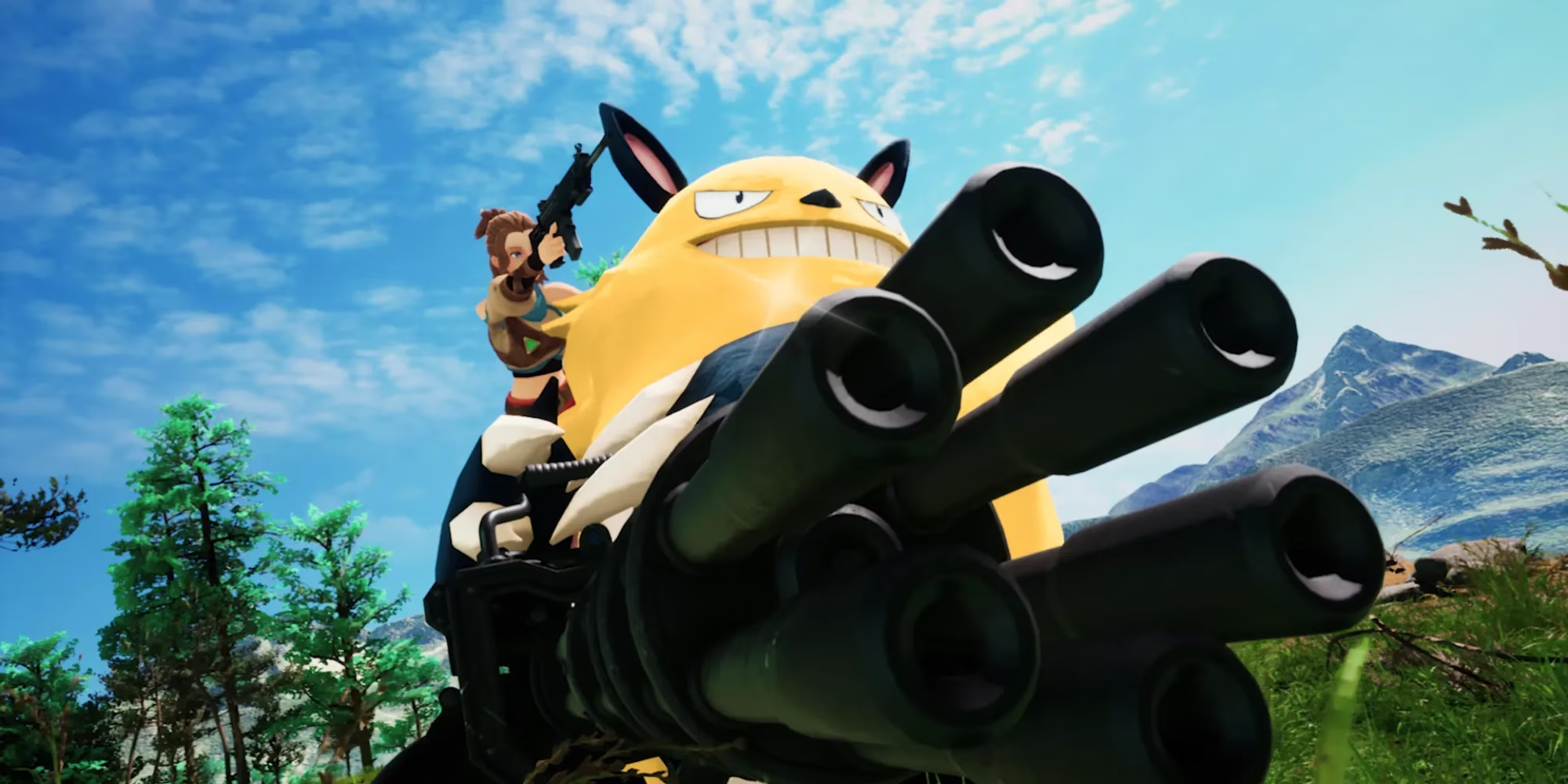
The core of Nintendo's claim, which finally materialized after years of speculation, was infringement of "multiple patent rights." Ever since our launch, the comparisons to Pokémon were inevitable. Side-by-side comparisons of some creature designs did show striking similarities—that much was undeniable. The gaming community had been waiting for this legal shoe to drop since 2024. But as a player and developer, the situation always felt more nuanced. Yes, we drew inspiration from the monster-catching genre, a genre Pokémon helped define. But Palworld's soul was always different. It was never a carbon copy.
Where Palworld Forged Its Own Path:
If the lawsuit was about core mechanics, then I felt we had a strong case. Palworld doesn't play like a traditional Pokémon game at all. Our foundation is a survival sandbox, much closer to the feel of games like Ark: Survival Evolved. You're not just a trainer on a journey; you're a survivor building a base, crafting weapons, and managing resources in a sometimes harsh world.
The familiar mechanics—using spheres to catch creatures and having them battle—were part of that world, but they served a different purpose. Here's a quick breakdown of how Palworld diverges:
| Gameplay Aspect | Traditional Pokémon Game | Palworld (Our Vision) |
|---|---|---|
| Primary Loop | Turn-based RPG, collection, narrative journey. | Survival crafting, base building, open-world exploration. |
| Creature (Pal) Role | Battling companions, collection for completion. | Workforce, defenders, mounts, and yes, sometimes combat allies. |
| World Interaction | Limited environmental interaction, focused on routes and towns. | Deep interaction: farming, mining, construction, and automation using Pals. |
| Combat Style | Strategic, turn-based, type-matchup focused. | Real-time action, can involve player-wielded weapons and Pal synergies. |
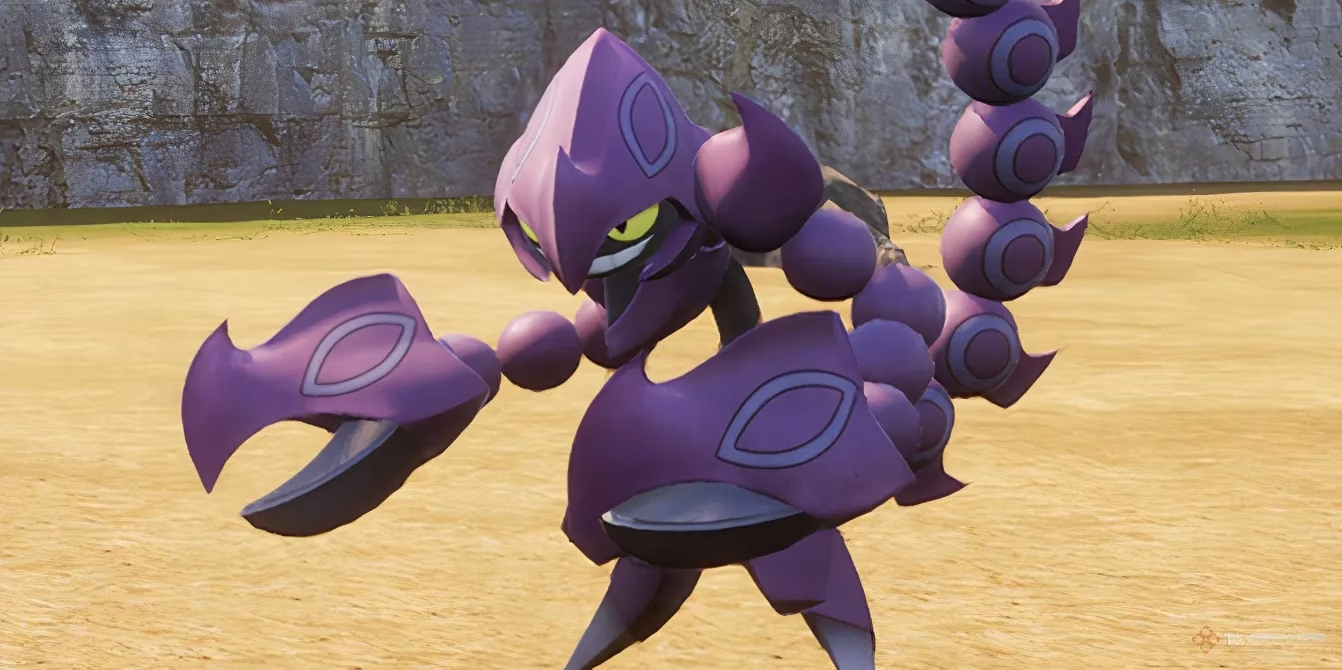
The most frustrating part as we entered this legal fray was the lack of specificity. Nintendo's broad claim left everyone, including us, in the dark. In our statement, we had to admit we were "unaware of the specific patents we are accused of infringing upon." Were they targeting the visual designs of the Pals? The underlying code for creature behavior? The user interface for our capture spheres? Or perhaps a patent related to real-time creature battling systems? This ambiguity made preparation incredibly difficult. It felt like preparing for a battle without knowing what weapons the opponent would use.
This lawsuit, for me, transcended the specifics of Palworld. It became a symbol of the constant tension between inspiration and imitation in game development. Every game stands on the shoulders of those that came before. The survival genre, the monster-taming genre, the crafting genre—they are all built by developers learning from and building upon each other's work. Where is the line? That's the multi-million-dollar question we found ourselves at the center of.
Why This Fight Matters for All Indies:
As a developer, this experience has been emotionally draining but critically enlightening. Here’s what’s at stake for the broader community:
-
😰 The Chilling Effect: A victory for Nintendo based on broad, unspecified patents could discourage other small teams from even approaching popular genres for fear of litigation.
-
⚖️ Defining "Inspiration": The outcome could help clarify the legal boundaries between being inspired by a genre's conventions and unlawfully copying protected intellectual property.
-
💡 Innovation Cost: Legal defense is astronomically expensive for a small studio. Funds that should go to salaries, software, and marketing get diverted to lawyer fees, directly hindering innovation.
Looking back from 2026, the landscape has shifted. The lawsuit forced us to be meticulous, to audit every aspect of our game's design with a fine-tooth comb. It was a painful process, but it also made us more robust. Our commitment never wavered. We continued to update Palworld, adding new biomes, more complex Pal behaviors, and deeper automation systems, all while this legal cloud hung overhead. The support from the global gaming community was our fuel—messages from players and fellow devs reminding us why we started making games in the first place: to bring joy and share creative worlds.
This battle is far bigger than Pocketpair versus Nintendo. It's a case study for our era, a test of whether there is room for new voices and interpretations within well-established gaming paradigms. As I log off another long day that mixed coding with legal consultations, I'm reminded of our original statement. We fight so that the next indie developer with a crazy, brilliant idea—be it a sci-fi monster tamer or a fantasy survival sim—isn't hindered or discouraged before they even begin. The future of creative gameplay depends on it.