
Palworld offers a fresh, gritty twist on creature collection games, rivaling Pokémon with survival elements and captivating exploration.
The world was saturated with tales of electric rodents and water-type starters, a chorus of childhood memories I could only listen to from the sidelines. While my friends traded cards and debated gym leaders, my own world remained curiously devoid of pocket monsters, shaped by different rules. It was a quiet exclusion, a cultural touchstone observed but never touched, until the seismic waves of 2024 brought the Palpagos Islands crashing onto my shores. In Palworld, I didn't just find a game; I found my own, unfiltered entry point into a genre I had only ever admired from afar.
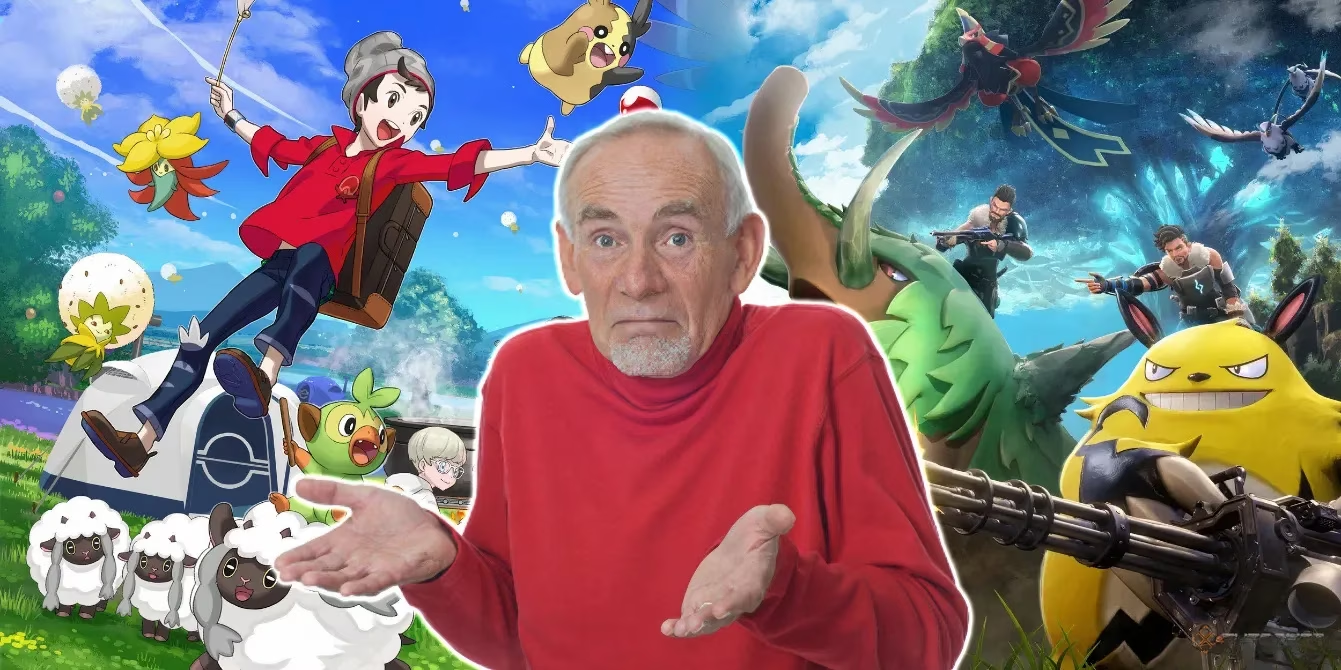
The initial frenzy was a spectacle. Millions sold, a community born overnight, and a tempest of outrage from dedicated trainers who saw in Palworld's creatures a familiar, perhaps too familiar, silhouette. For me, unburdened by decades of nostalgic attachment, there was no conflict—only wonder. I saw Lamball, that adorable rolling sphere of fluff, and felt an instant, uncomplicated affection. I'll champion its fluffy superiority over any Wooloo any day of the week. The debate over originality versus imitation raged around me, but within my own experience, Palworld felt less like a knock-off and more like a passionate, if rough-edged, love letter to the idea of creature companionship, infused with a gritty, survivalist heartbeat that demanded more than just friendship.
My adventure was one of quiet discovery, away from the noisy comparisons. The islands held secrets not in obvious plotlines, but in scattered journal pages and environmental whispers. Instead of a clear-cut journey to become the very best, I pieced together a darker tapestry of corporate espionage, forbidden genetic tampering, and political corruption. This was a world with adult stakes, a far cry from the streamlined, heroic narratives I had glimpsed in Pokémon. The Tower Bosses stood as formidable challenges, but their motivations were shrouded, left for me to unravel. This lack of spoon-fed lore wasn't a deficit; it was an invitation to become an archaeologist of this broken world.
Oh, let's be perfectly clear: the path was far from smooth. The game, in its ambitious early access state, was a delightful mess. Pals would get irrevocably stuck on geometry, pathfinding logic would occasionally short-circuit, and the specter of 'artistic integrity' debates was a constant background hum. Yet, these flaws existed within a framework I found irresistibly compelling. The core loop—catch, build, survive, breed—had its hooks in me deep. It wasn't about battling for supremacy, but for sustainability and progression in a world that felt authentically wild and demanding.
Many made the cardinal error of viewing Palworld solely through the lens of Pokémon. This, I believe, is a profound disservice to both. Yes, the surface-level comparison is inevitable: you catch creatures in spheres. But the soul of the experience diverges radically. While recent Pokémon titles have tentatively embraced open spaces, Palworld was built from the ground up as a vast, interconnected wilderness where climbing a cliff or building a fortress was as integral as throwing a sphere. Pokémon's foray into this design philosophy felt, to me, like a hesitant afterthought. To focus only on the shared premise is to miss Palworld's true lineage, which owes far more to the survival-crafting DNA of games like Ark: Survival Evolved and the exploratory freedom of Breath of the Wild.

My own attempt to connect with Pokémon, years after the childhood ban was lifted, ended in a feeling of hollow repetition. The grind felt obligatory, the competitive scene an insurmountable fortress built over decades. My adventure in Galar was a blur of one-hit knockouts from a single powerful companion, leaving me with the distinct sensation of having missed the point entirely. The magic everyone spoke of remained just out of reach, locked behind systems of breeding and training that felt more like spreadsheet management than adventure.
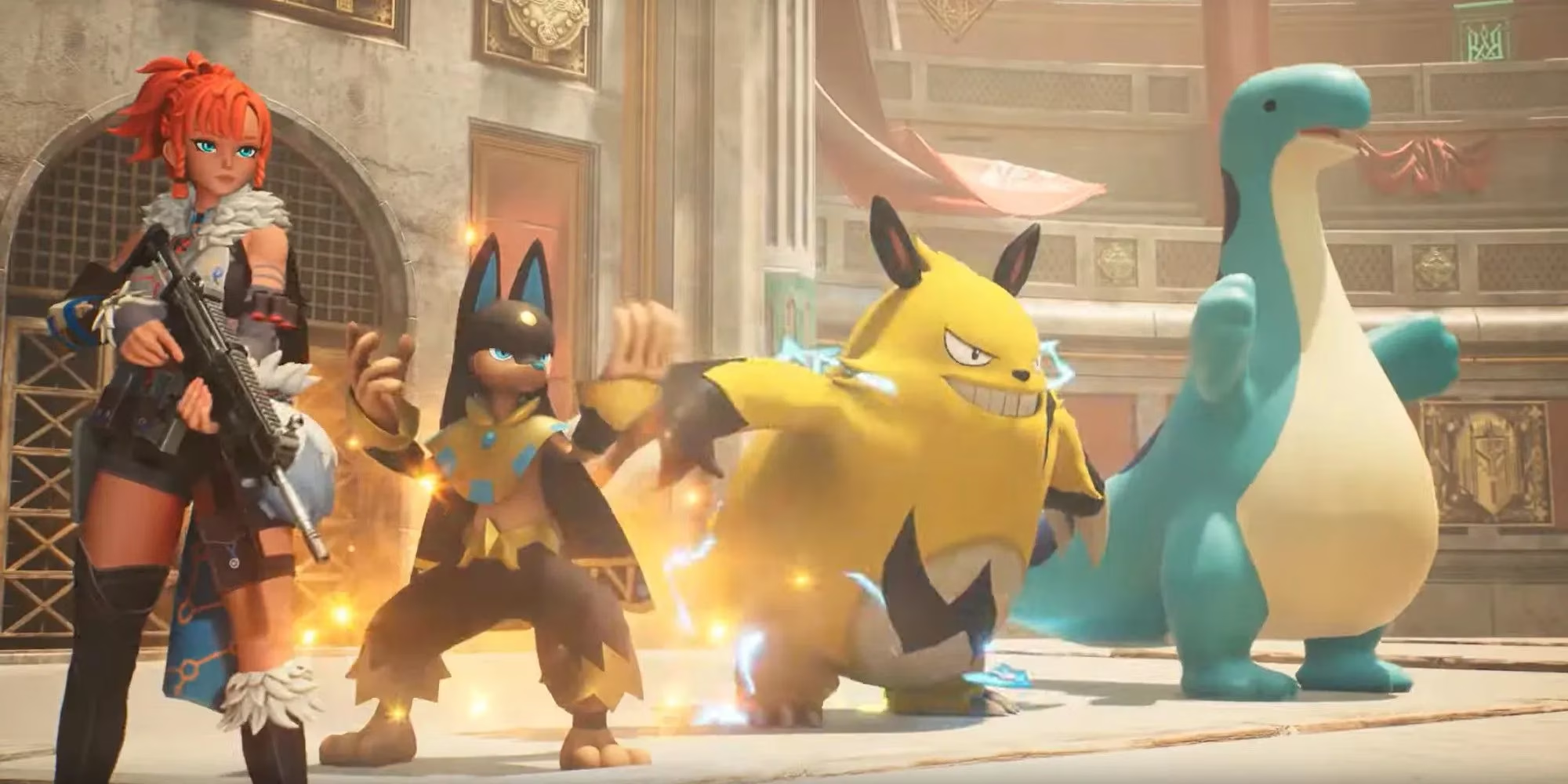
Palworld, conversely, made the intricate systems of breeding and trait inheritance not just accessible, but essential and deeply rewarding. The goal wasn't a perfect IV stat for a tournament; it was breeding a flying mount with the 'Swift' trait to finally reach that distant, storm-wracked island. It was about creating a perfect ranch-hand to automate my berry farm. I found a strange, profound joy in the mundane: baking cakes in a crude oven, tending to massive eggs, and managing a base that felt alive with the industry of my Pals. It was a survival game, a creature-collector, and a cozy farming sim all at once, and that beautiful, chaotic amalgamation spoke directly to me.
As we look ahead from 2026, the journey of Palworld continues to unfold. The promising Sakurajima update was merely a prelude to the expanded horizons we've seen since. The developers have steadily sanded down the rough edges, added layers of depth, and expanded the world, all while navigating the tumultuous waters of public perception. The game has carved out its own identity, proving that there is immense space in this genre for different tones, mechanics, and philosophies.
My childhood, free from one particular influence, allowed me to embrace another with open arms and a clear heart. I understand the passion that fuels the defense of a beloved legacy, but I also mourn the experiences missed by those who let comparison cloud their judgment. In the end, my story isn't about Palworld versus Pokémon. It's about finding your own path to joy in a vast digital landscape. The Palpagos Islands, with all their quirks, bugs, and breathtaking sunsets over a base built by my own hands (and the labor of my trusty Pals), offered me that path. It was messy, imperfect, and utterly mine. And sometimes, that's the most magical discovery of all.