
Discover why mouse and keyboard are essential for mastering co-op survival and precision gameplay in titles like Dead by Daylight and Terraria.
As I sit before my glowing monitor in 2026, the hum of my PC a familiar companion, I reflect on the countless digital landscapes I’ve traversed with friends. Co-op gaming, for me, has never been just about shared objectives; it’s a tapestry of late-night laughter, frantic shouts of warning, and the silent, focused communion of a perfectly executed strategy. While a controller rests comfortably in my hands for some journeys, there are worlds—particularly those brimming with chaos, precision, and frantic action—where the mouse and keyboard feel less like tools and more like extensions of my own intent. They are the brushes with which I paint my survival across these unforgiving, beautiful games.
The dance of survival in Dead by Daylight is a ballet of terror. Here, every pixel of movement counts. The swift, fluid pan of my mouse lets me drink in the eerie atmosphere of a trial, scanning for the telltale shimmer of the Killer or the desperate sprint of a fellow Survivor. 🎯 When I embody the Huntress, her lethal axes become an extension of my will; the pinpoint accuracy of mouse-aim turns a desperate throw into a game-changing hit. The controller is a worthy opponent, but in this realm of split-second decisions, the keyboard’s array of keys and the mouse’s flickering cursor grant a palpable edge—a sharper sense of control in the face of overwhelming dread.
Then there are the worlds of creation and conquest, like Terraria. This is a game of cozy chaos, a 2D canvas where I’ve built sprawling castles and delved into hellish caverns. In the early hours, any control scheme feels like home. But when the moon bleeds and celestial terrors descend, the battle shifts. Bosses like the Moon Lord move with blinding, pixel-perfect speed. With my mouse, I can weave my character through a storm of projectiles, repositioning with a click, aiming my Terra Blade or Last Prism with surgical precision. The controller offers charm, but the keyboard’s hotbar and the mouse’s aim transform late-game combat from frantic panic into a deadly, graceful art.
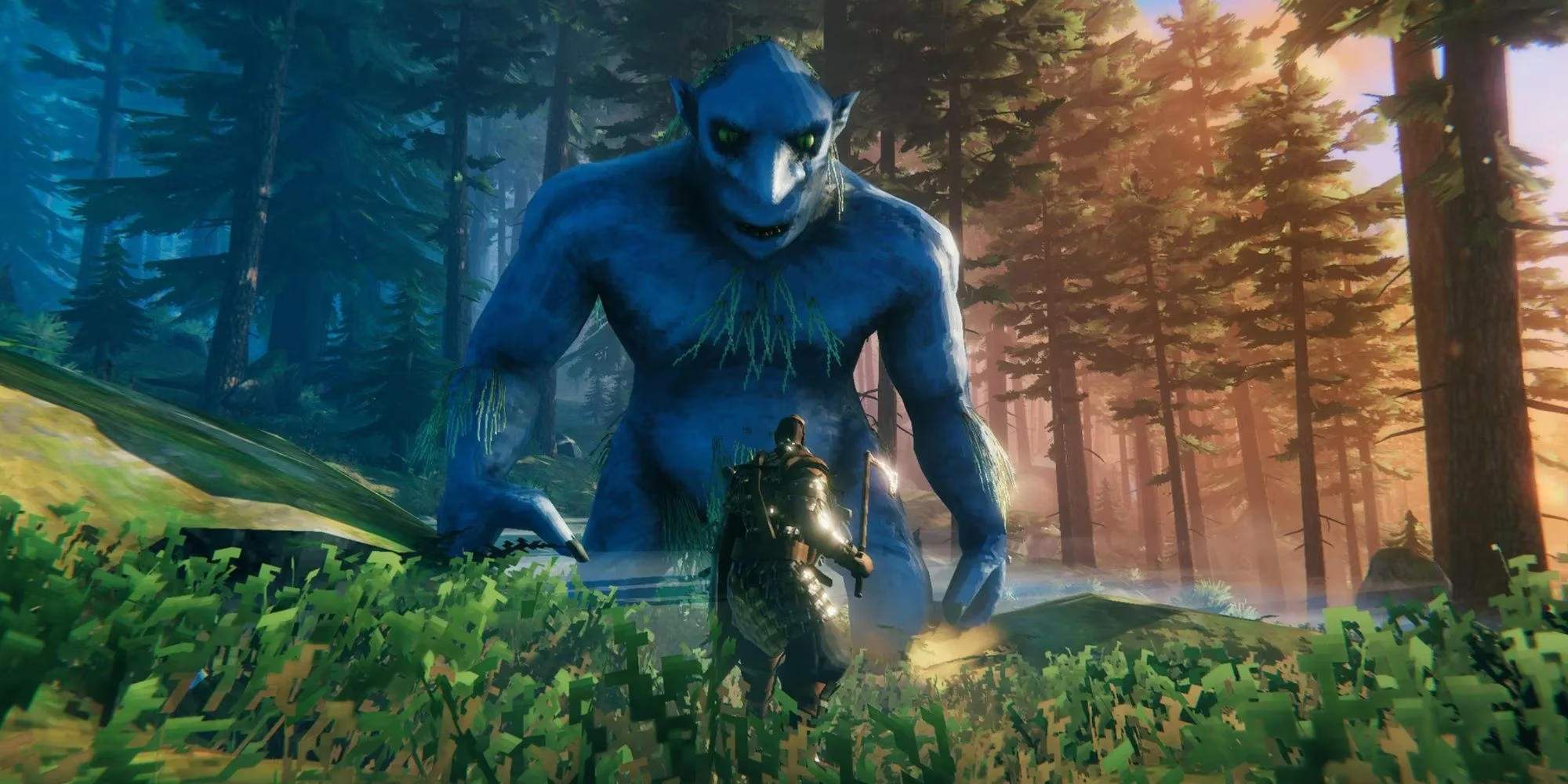
Valheim calls to the Viking within. The crunch of snow underfoot, the creak of my longship—it’s a world to get lost in. While swinging a battle-axe feels visceral and powerful on any device, the true test comes in the silent moments before the strike. 🏹 Drawing my bow against Moder, the great ice dragon circling a mountain peak, the world narrows to my crosshair. The subtle control of the mouse allows for minute adjustments, holding my breath virtually as I lead the shot, accounting for the wind and the beast’s majestic, terrifying arc. And when the battle is won, returning to my mead hall, the intricate process of constructing its towering roofs and detailed woodwork feels more intuitive, more directly connected to my imagination, with the freedom of PC building controls.
The phenomenon of Palworld was a storm we all rode together. Its blend of familiar creature collection and survival chaos was a global sensation. Even now, years after its early access frenzy, the core thrill remains. While the game has matured, smoothing over many of its initial rough edges, the tactile feedback of lining up a rifle shot on a rushing, fiery Pal still resonates most strongly with the steady hand a mouse provides. It’s that moment of pure accuracy amidst the cartoonish chaos that defines the experience for me.
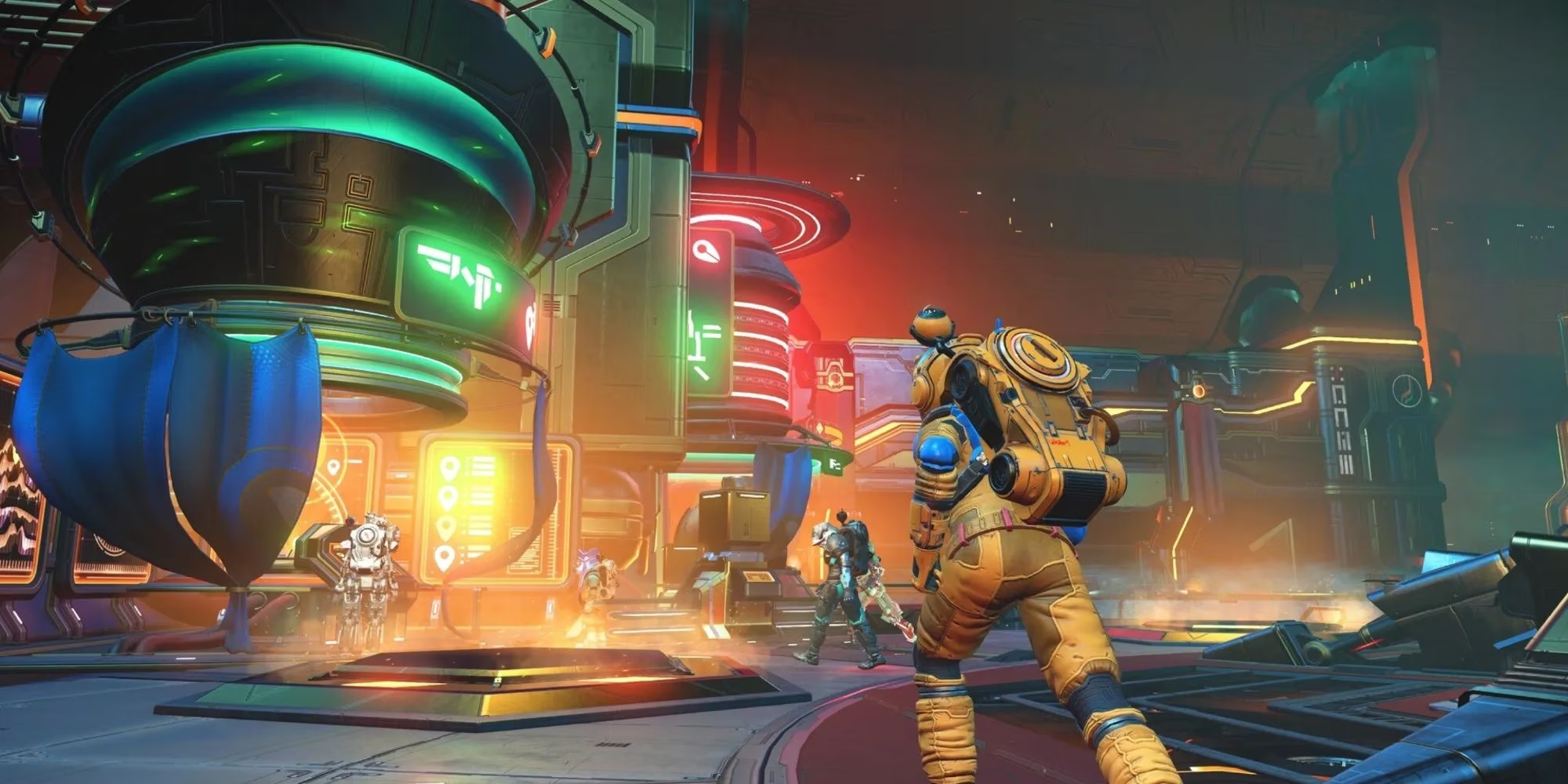
Not every journey demands such razor’s-edge precision. No Man’s Sky, in its current, vastly expanded state, is a meditation. Here, the choice of control is purely poetic. I might use a controller to lazily pilot my starship between the rings of a planet, but when I disembark to explore a whispering, alien forest or painstakingly place each piece in my planetary base, my hands naturally drift back to the mouse and keyboard. The act of exploration on foot—scanning flora, mining resources, and simply taking in the impossible vistas—feels more personal, more like a direct conversation with the universe, through these familiar inputs.
And then there are the epics, the narrative sagas like Baldur’s Gate 3. This masterpiece is, without doubt, a marvel of controller optimization. Yet, when I’m navigating the tangled web of Faerûn’s politics and battles, the keyboard and mouse become my strategic command center. The entire battlefield is laid bare under my cursor. I can swiftly queue actions, examine every character sheet without menus, and orchestrate complex spell combinations with the click of a button. Managing the myriad Actions & Bonus Actions for my entire party feels less like a menu navigation puzzle and more like conducting a symphony of sword, spell, and subterfuge.
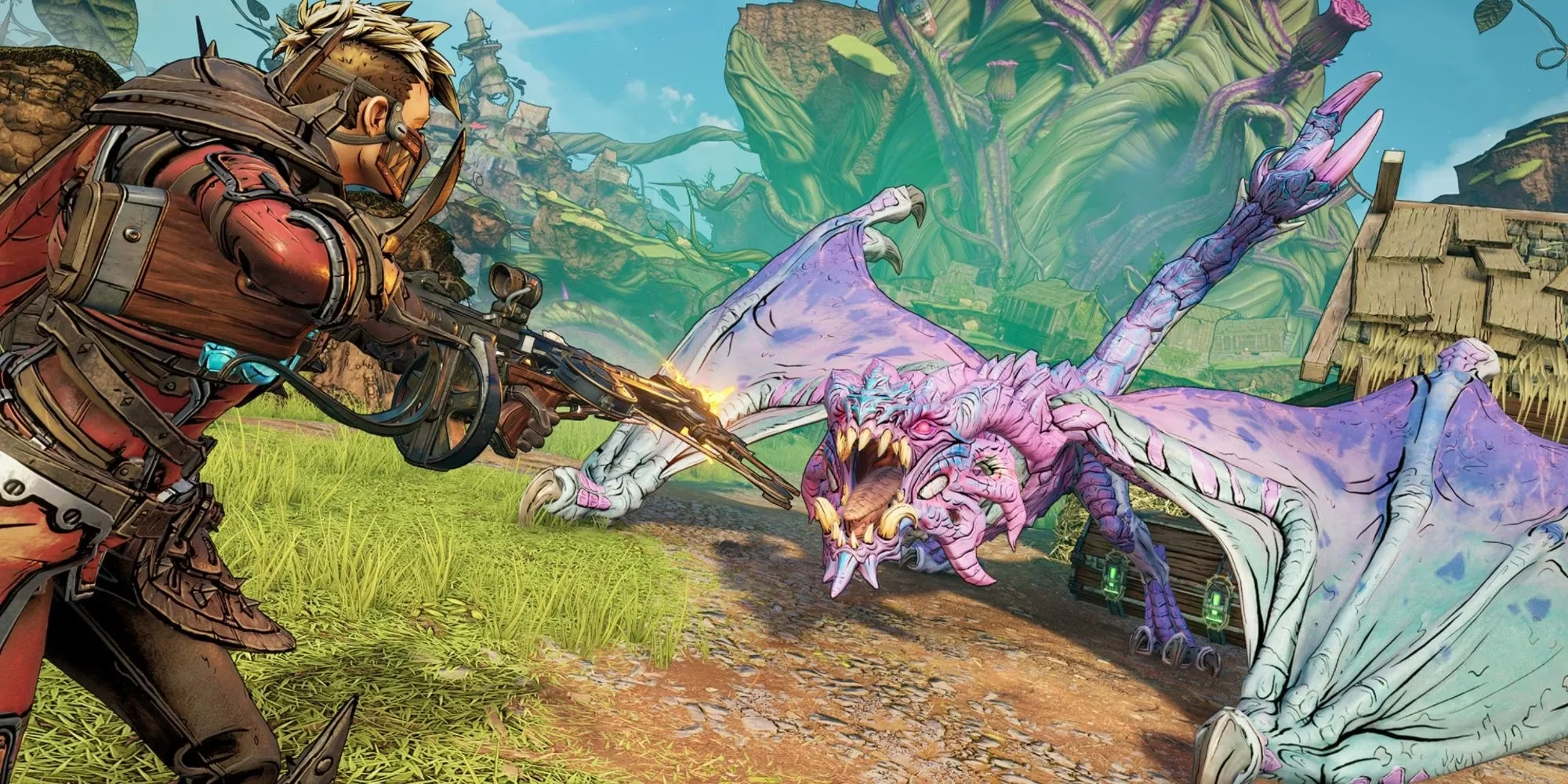
For pure, unadulterated co-op mayhem, the Borderlands legacy is unmatched. Tiny Tina’s Wonderlands throws us into a sugar-rush fantasy of spells and bullets. Here, the advantage is in the storm. Whether I’m unleashing a barrage from a chaotic shotgun that fires orbiting swords or precisely placing a localized tornado spell, the speed and accuracy afforded by my setup let me fully embrace the pandemonium. Dodging spells, crit-spotting fantastical beasts, and managing an inventory of a gazillion guns—it all flows faster, letting me sink deeper into the madcap joy of the fight alongside my friends.
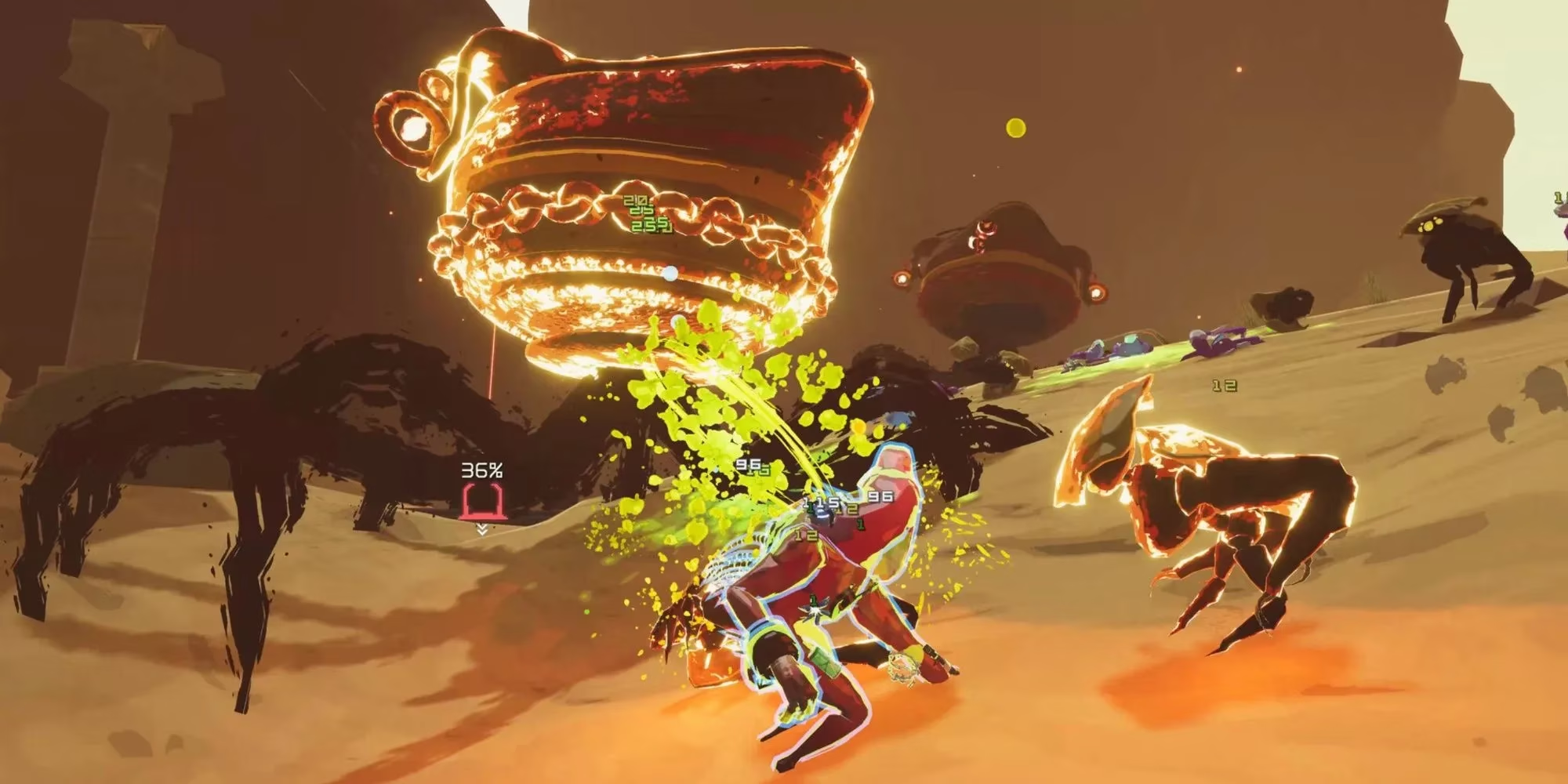
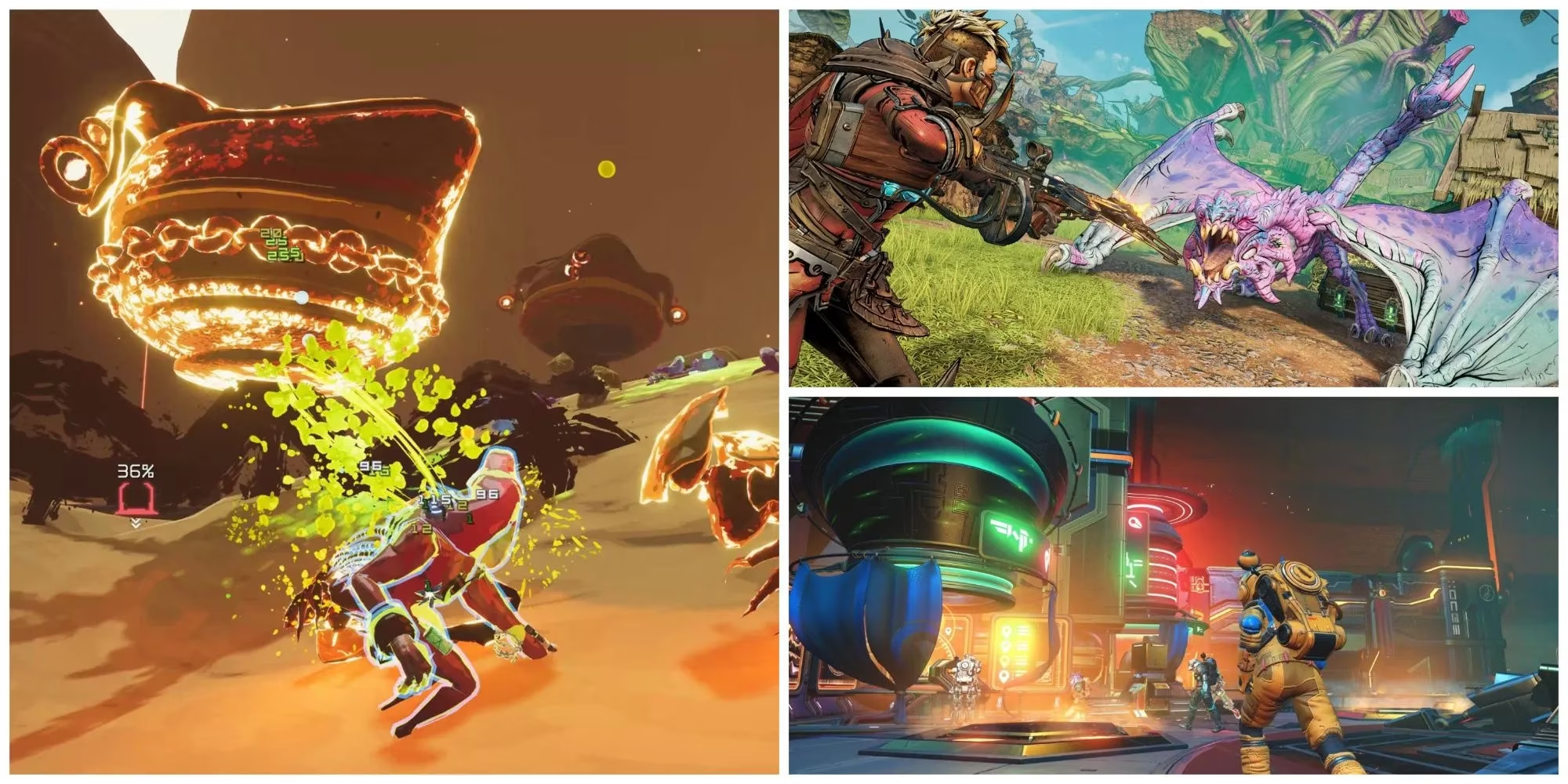
This brings me to the purest expression of controlled chaos: Risk of Rain 2. This game is velocity incarnate. It’s a beautiful, punishing loop of sprinting, leaping, and unleashing hell. When my screen is filled with a hundred enemies, a dozen particle effects, and a boss that fills the sky, the muscle memory of my keyboard and the twitch-response of my mouse are my lifelines. Juking with Shift, activating abilities without breaking movement, and snapping my aim to a crucial, high-priority target amidst the visual noise—these moments define the run. The controller can brave the storm, but my preferred tools let me dance in its eye.
| Game | Where Mouse & Keyboard Shine | The Feeling It Evokes |
|---|---|---|
| Dead by Daylight | Swift camera control & precise ability aim | The sharp focus of the prey becoming the predator |
| Terraria | Late-game boss evasion & precise weapon aiming | The transition from builder to master warrior |
| Valheim | Archery accuracy & intricate building | The hunter’s patience and the architect’s vision |
| Risk of Rain 2 | High-speed movement & target prioritization in chaos | Becoming the storm itself |
In the end, this isn’t about superiority. It’s about connection. The controller is an embrace, a comfortable link to the action. But for me, the mouse and keyboard are a conversation—a direct, unfiltered dialogue with these digital worlds. They translate my immediate thoughts into swift movement, into a perfectly placed shot, into a structure built exactly as I imagined it. In the shared universes of co-op play, where friendship is the true meta, these tools simply help me contribute my verse to the epic with a little more grace, a little more precision, and the full weight of my intent.