
Discover the most disappointing Palworld Partner Skills, from Leezpunks' inconsistent Sixth Sense to Lamball's underwhelming Fluffy Shield and Melpaca's sluggish Cloud Running, as this guide reveals critical lessons in optimizing your Pal team for survival and success.
As I've ventured across the Palpagos Islands over the past two years, my adventure has been defined by the incredible Pals I've befriended. These creatures, with their unique Partner Skills, have been the backbone of my survival, crafting, and combat. However, not every partnership blossoms into a fruitful one. Through trial and error, I've learned that some Pals, while charming or seemingly useful at first glance, ultimately end up being disappointments or simply outclassed by their peers. This is my personal account of the Pals whose Partner Skills I've found to be the least beneficial, and the lessons I learned from them.
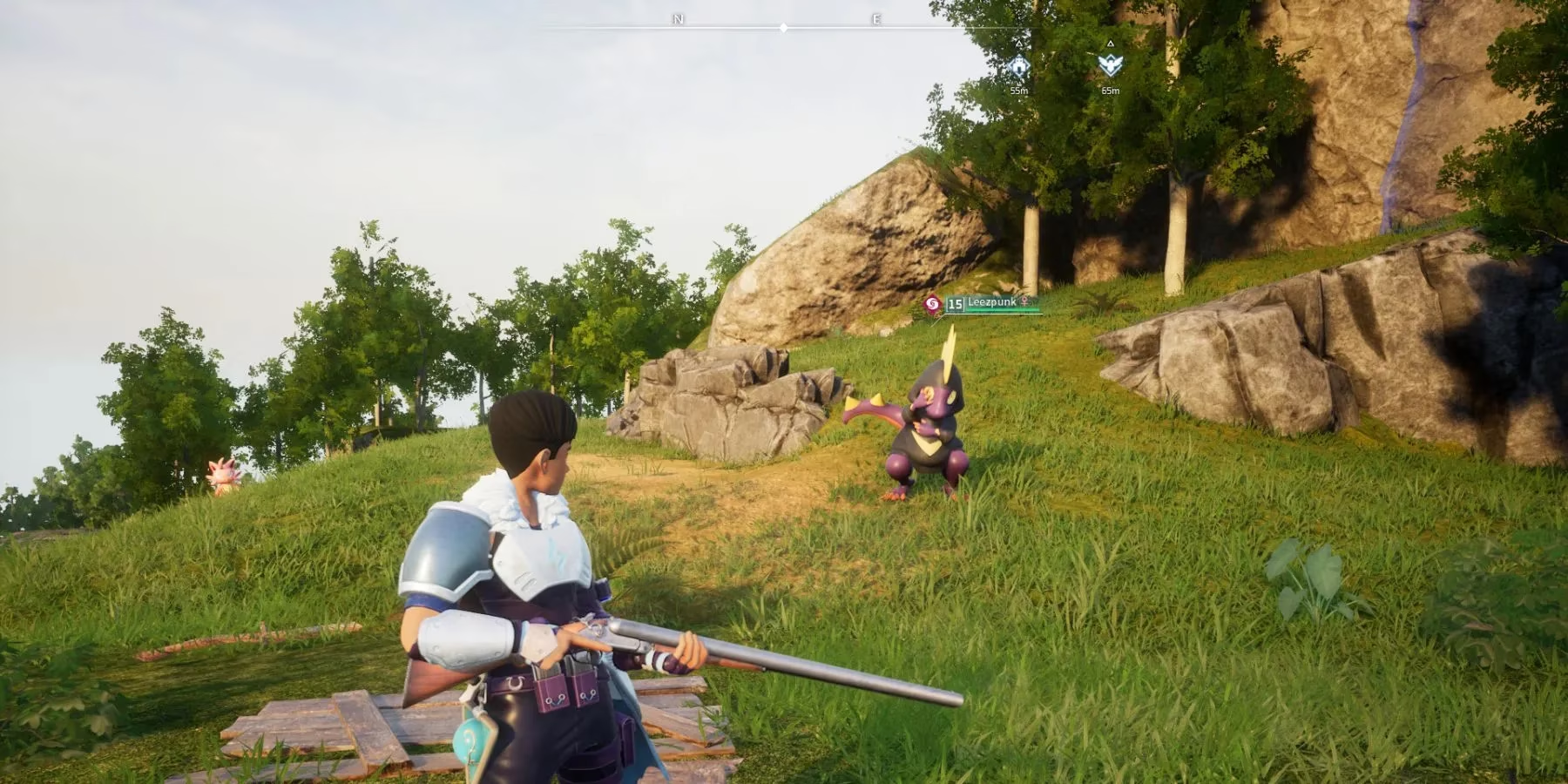
Let me start with Leezpunks. On paper, their Sixth Sense skill sounds fantastic: activating it highlights the direction and distance to the nearest dungeon on your compass. In practice, I found this ability maddeningly inconsistent. The "right moment" to use it never seemed to arrive. Dungeons in Palworld have static locations, and after a few dozen hours of exploration, I'd already mentally mapped them. Sixth Sense offers no passive bonus, and its active use is a gamble. It's not a bad skill, but it's a classic case of a great concept with poor execution. I'd much rather have a Pal in my active party that provides a constant, tangible benefit to my endeavors.
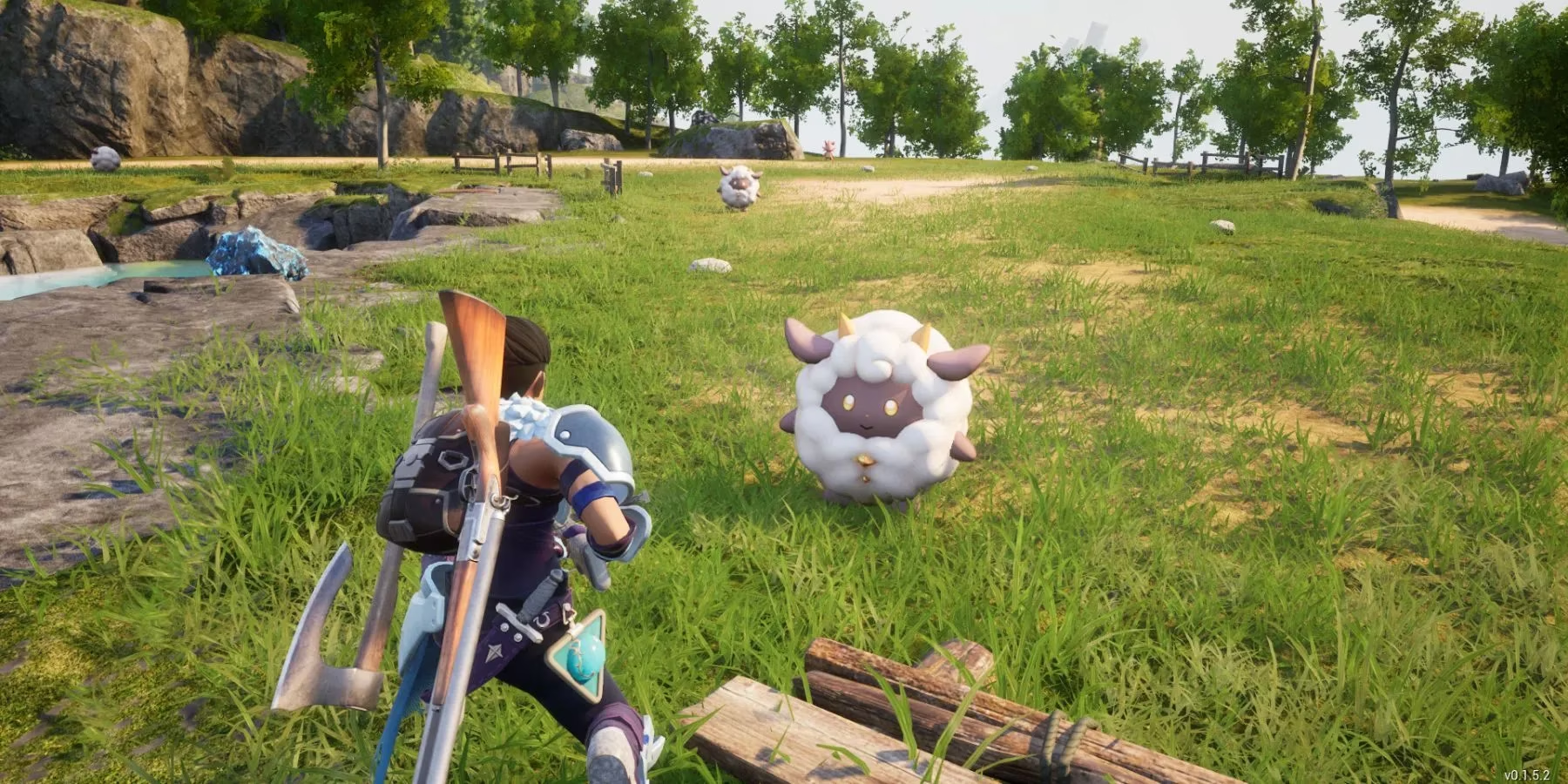
Then there's the iconic Lamball. Who doesn't love this fluffy sphere? Its Fluffy Shield skill is a dual-purpose ability: it can be equipped as a personal shield or, when assigned to a Ranch, it will occasionally drop Wool. This sounds versatile, but both functions have severe limitations. The shield's utility nosedives after the early game, when enemy damage quickly outscales its protective value. As for the Wool production, it's so sporadic and minimal that it's barely worth the Ranch slot. Wool is a common resource that can be farmed more reliably from dedicated Pals or found in the wild. My Lamball ended up as a cute mascot in my base, not a valuable member of my workforce or combat team.
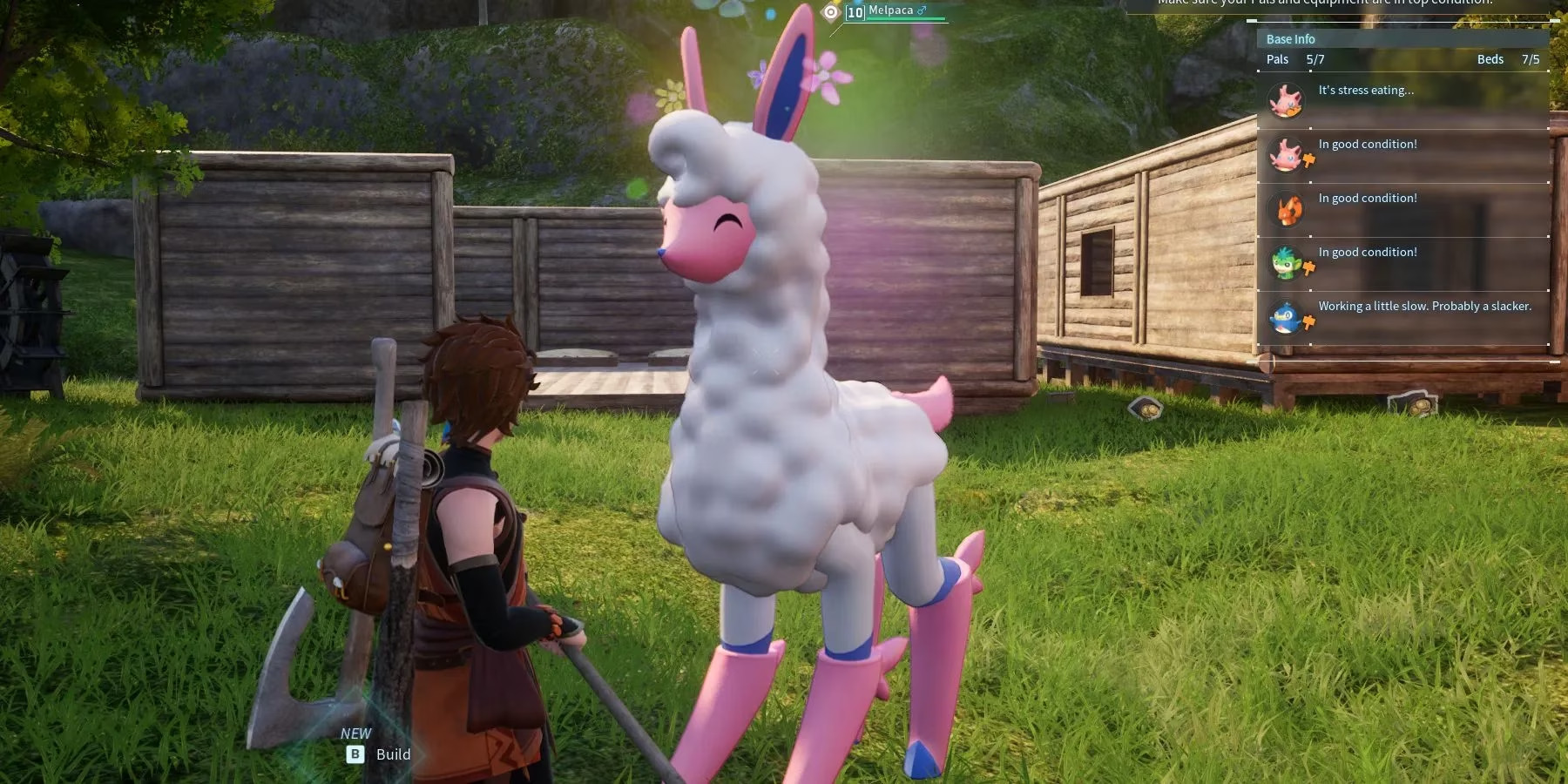
The Melpaca taught me a harsh lesson about comparative utility. Its Cloud Running skill lets you ride it and also allows it to drop Wool at a Ranch. The riding function, however, is painfully slow. I clocked its mounted speed as being nearly 50% slower than an early-game mount like the Eikthyrdeer. In a game where traversing vast distances is a core activity, speed is king. The Wool-dropping aspect suffers from the same issue as Lamball's: it's an inefficient use of a precious Ranch slot. Why would I use a slow mount that provides a mediocre secondary resource when I could have a fast mount and a dedicated resource farmer?
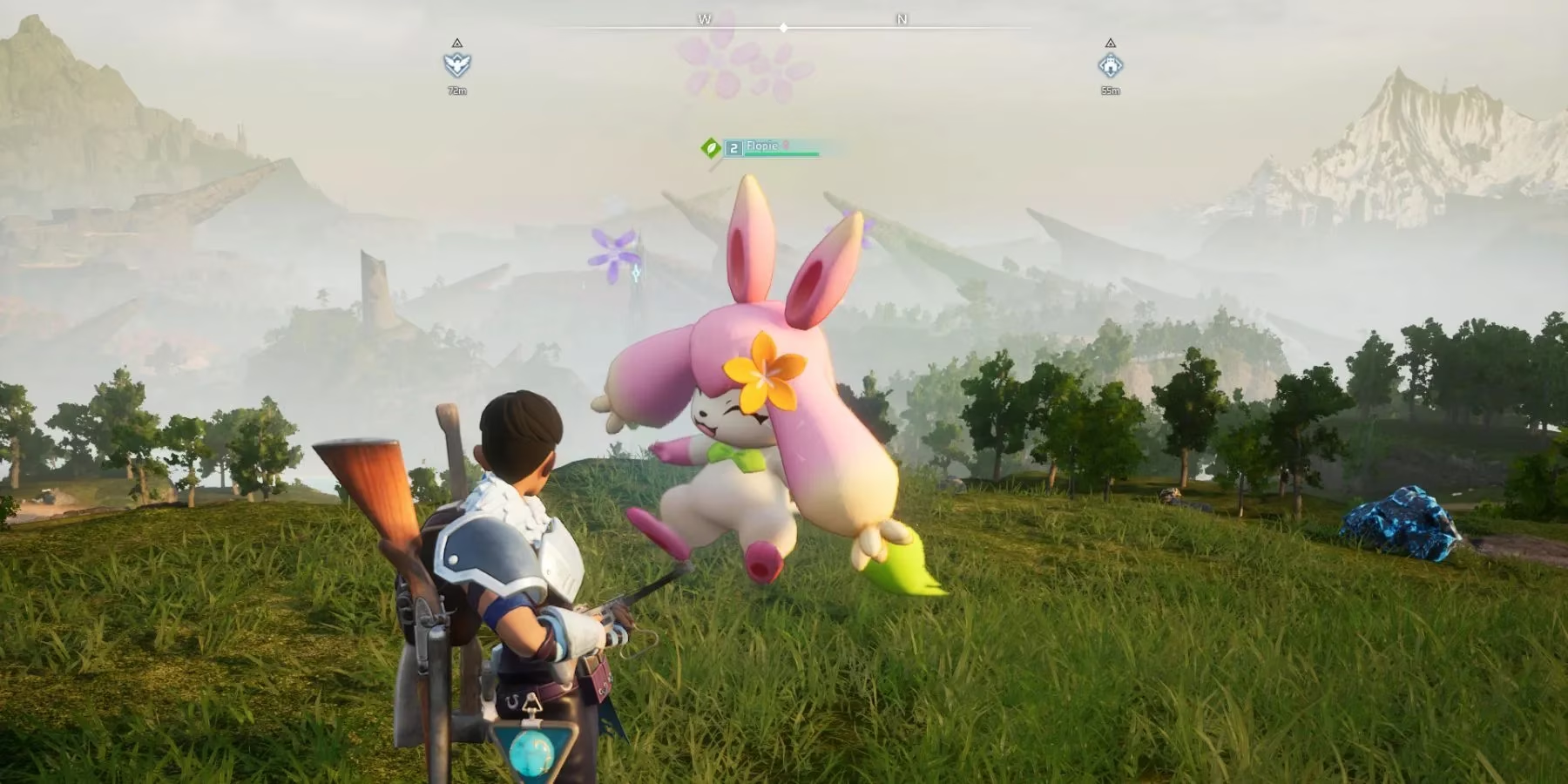
Flopie's Helper Bunnies skill initially seemed like a quality-of-life dream. With Flopie in your party, little helpers automatically scurry around and pick up items for you. In reality, I found this incredibly annoying. As someone who likes to manage my inventory meticulously and know exactly what I'm picking up, the constant, automated grabs were disruptive. It would often pick up low-tier materials I didn't want, cluttering my inventory. While it could be useful during a dedicated resource-gathering run, I'd rather use a Pal with a skill that increases my gathering yield or speed directly, giving me control over the process.
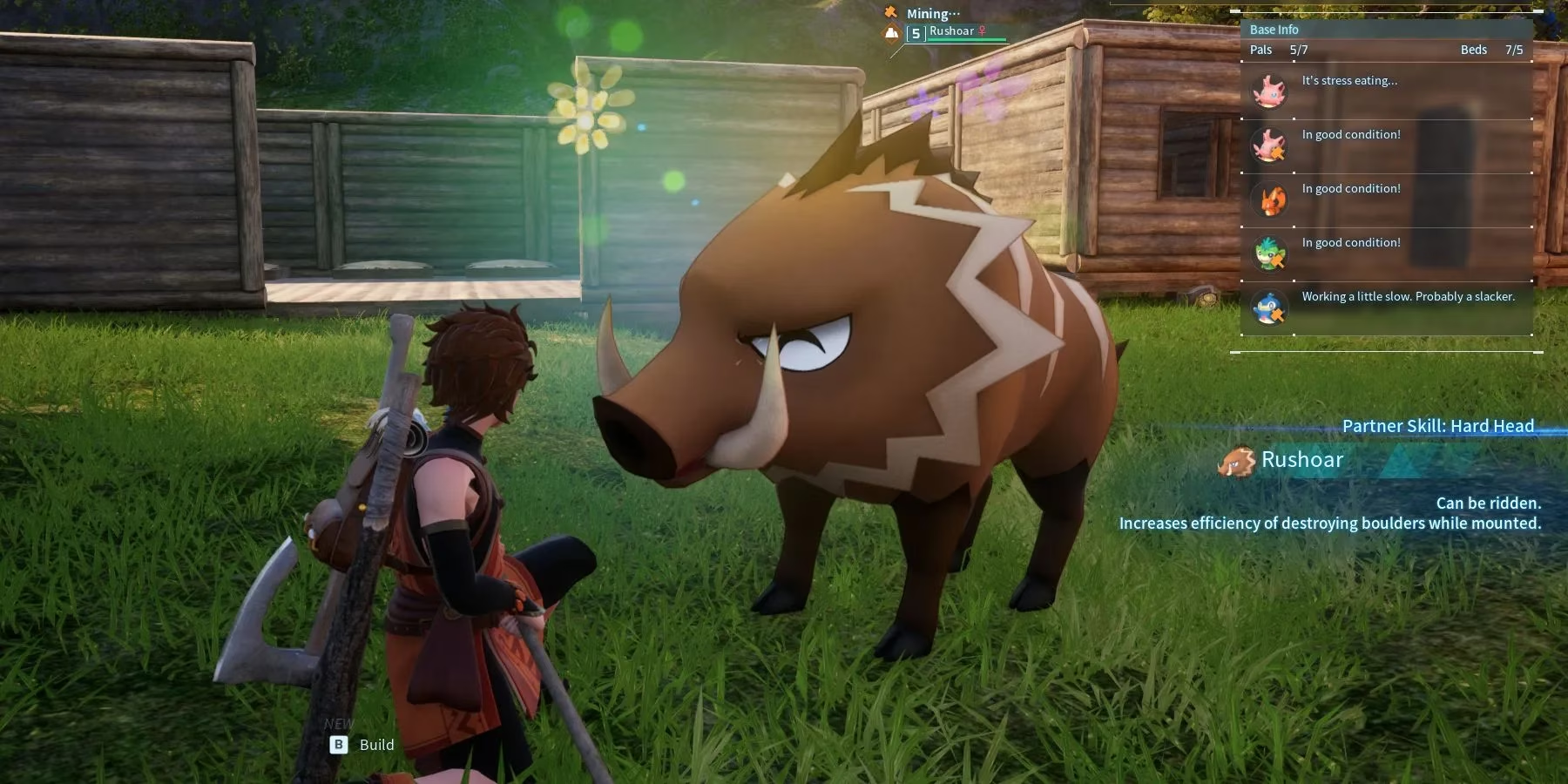
Rushoar's Hard Head skill promises a mounted mining bonus. When ridden, it increases the efficiency of destroying boulders. The problem is twofold: first, its movement speed as a mount is unremarkable, and second, the mining bonus is only active while you are mounted. In the mid-to-late game, I had Pals with high Mining Suitability levels who could tear apart ore nodes far faster than I ever could while riding a Rushoar. This made the skill incredibly niche. The opportunities where I needed to personally mine something quickly while mounted were virtually zero. I quickly swapped it out for more versatile early-game Pals.
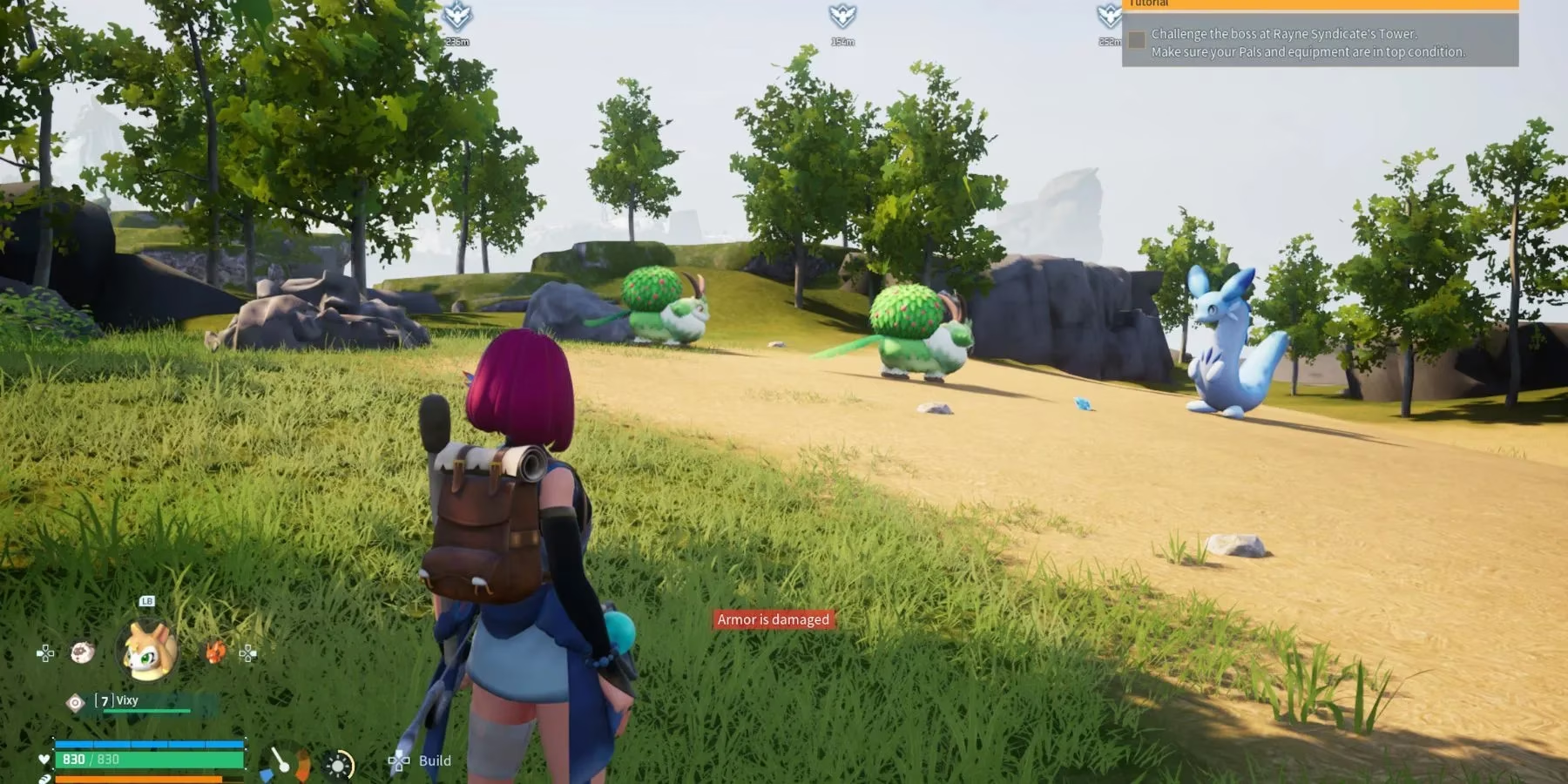
Finally, we have Caprity. Its Berry Picker skill causes it to drop Red Berries when assigned to a Ranch. This might seem useful for sustaining your Pals' food supply, but Red Berries are arguably the most abundant resource in Palworld. You can find them on bushes everywhere, buy them cheaply from Merchants, and most importantly, grow them en masse in a Berry Plantation. A single plantation, requiring just 3 Berry Seeds, 20 Wood, and 20 Stone, will produce a steady, reliable stream of berries forever. Using a Caprity in a Ranch is a massive waste of a slot that could be occupied by a Pal producing much rarer and more valuable materials like Honey, High-Quality Pal Oil, or even Wool.
Lessons Learned & Better Alternatives
My experiences with these Pals taught me to evaluate Partner Skills based on a few key criteria:
-
Consistency & Passivity: Skills that provide a constant, passive benefit (like increased carry weight, movement speed, or work speed) are almost always superior to highly situational active skills.
-
Resource Efficiency: Does this skill produce a resource that is truly scarce, or can it be obtained more easily elsewhere?
-
Opportunity Cost: Does having this Pal in my party or base prevent me from using a Pal with a far more impactful skill?
Here are some early-game Pals I found to be vastly superior to the ones listed above:
| Pal | Partner Skill | Why It's Better |
|---|---|---|
| Cattiva | Cat Helper | Increases your carrying capacity—a universally useful passive that's relevant from minute one to endgame. |
| Tanzee | Cheery Rifle | Can be used as an assault rifle in a pinch, providing early combat utility when weapons are scarce. |
| Vixy | Dig Here! | When assigned to a Ranch, digs up Pal Spheres, arrows, and coins. This produces valuable, crafted items for free. |
| Chikipi | Egg Layer | Produces Eggs at a Ranch, a crucial ingredient for advanced food like Cake, used in Breeding. |
In the end, Palworld is a game of optimization and synergy. While I have a fondness for every creature I've caught, my success was built by learning which partnerships to cultivate and which were better left as entries in my Paldeck. The journey taught me that a Pal's true value isn't just in its appearance or a flashy skill description, but in how reliably and powerfully it contributes to the ecosystem of my base and the strength of my adventures.