
Nintendo's high-stakes lawsuit against Palworld's developer centers on a specific patent for the iconic Poké Ball capture mechanic. This legal showdown continues to unfold in 2026, with the core dispute crystallizing around the game's strikingly similar Pal Spheres.
The gaming world is still buzzing in 2026, folks. A legal showdown for the ages continues to unfold, with Nintendo maintaining its high-stakes lawsuit against Palworld developer Pocketpair. While the initial shockwaves from the suit's announcement have settled, the core of the dispute appears to be crystallizing around a very specific, and very familiar, piece of digital gadgetry: the capture sphere. Nintendo hasn't spelled out every detail publicly, but the breadcrumbs lead straight to a patent for the iconic Poké Ball, a patent that got a very interesting update right around the time Palworld was taking the world by storm. Talk about timing, huh?
The Heart of the Matter: A Patent Under the Microscope
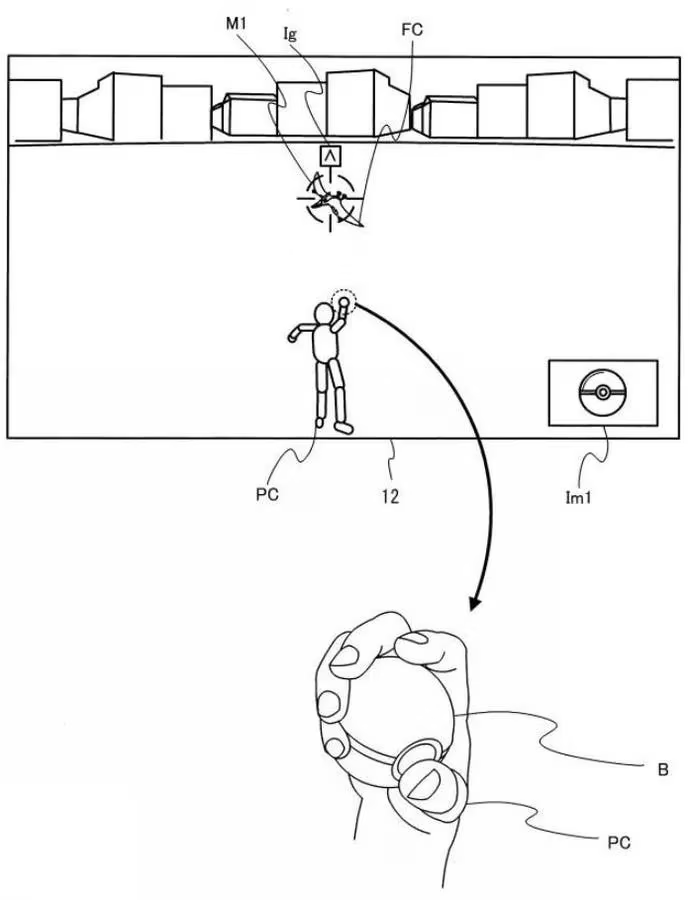
The crux of Nintendo's argument, as pieced together by industry observers, seems to hinge on the mechanics of creature capture. Back in the Summer, an existing patent jointly held by Nintendo and The Pokémon Company was updated. This wasn't just a routine tweak; according to experts like Japanese patent attorney Kiyoshi Kurihara, the amendment specifically detailed the function of a capture device—how it works to contain a creature and, upon success, transfers ownership to the player. It's the digital equivalent of throwing a net and saying "You're mine now."
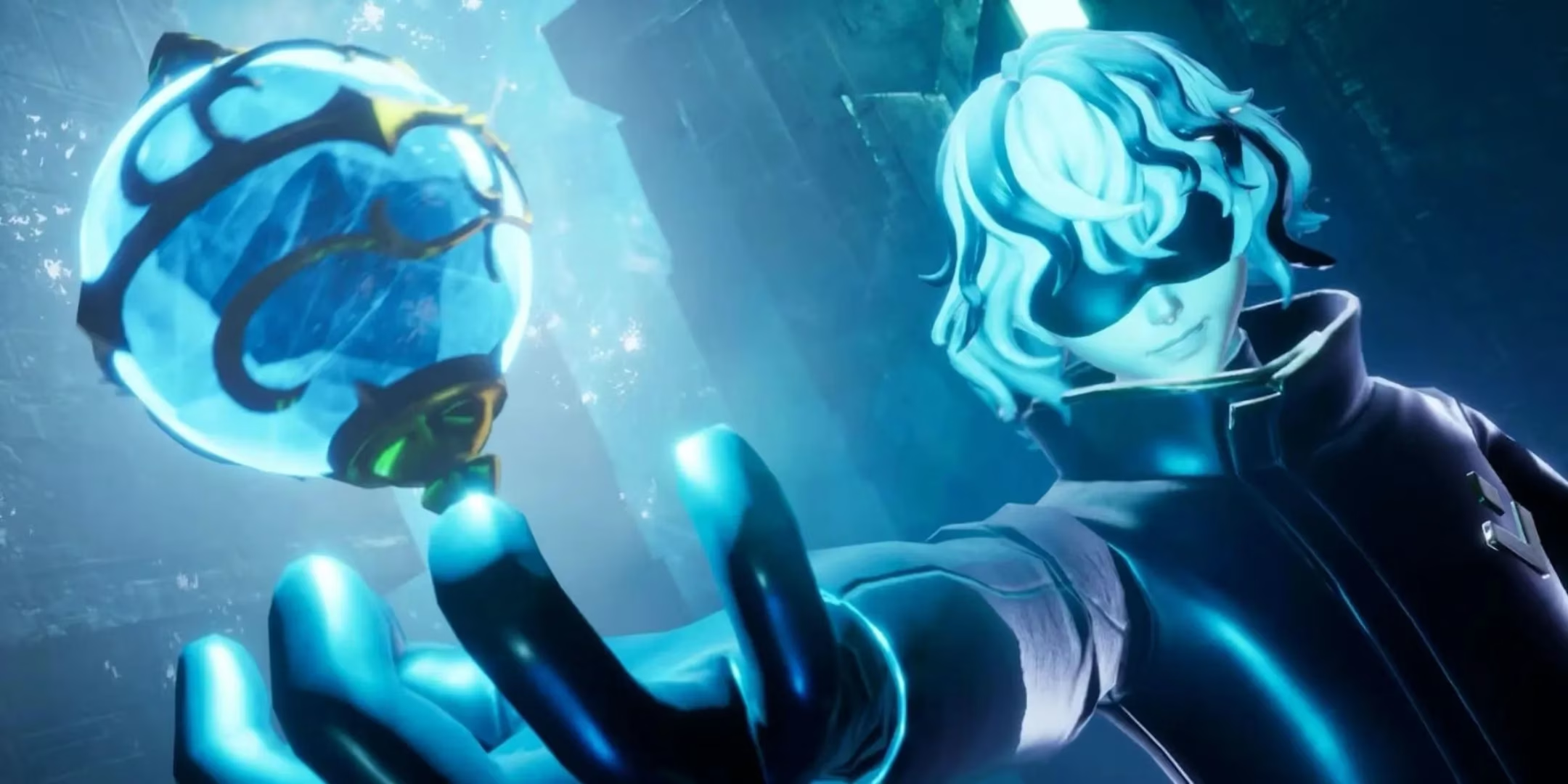
Now, let's be real here: Palworld's Pal Spheres operate on a near-identical principle. The core loop is unmistakably similar—aim, throw, capture, own. The main differences are cosmetic (the name and the spherical design with a different aesthetic). In the world of patent law, especially regarding game mechanics, this similarity is... let's just say it's raising eyebrows in court. Kurihara's analysis suggests this updated patent was almost certainly a direct response to Palworld's gameplay, effectively fortifying Nintendo's legal position just as it prepared to take action.
Pocketpair's Gambit: Fighting Back in the Fog
On the other side of the ring, Pocketpair isn't backing down. The developer has formally responded to the lawsuit, confirming its intent to fight the allegations. The twist? They've stated they aren't even entirely sure which specific patents they're accused of infringing upon. This creates a fascinating dynamic in the legal battle:
-
Nintendo's Position: Armed with what it calls "multiple patent rights" being violated, starting with this foundational capture mechanic.
-
Pocketpair's Position: Ready to defend its work but operating without full clarity on the exact accusations beyond the broad claims.
It's a classic David vs. Goliath scenario, but Goliath has a library of meticulously documented patents. The silence from Nintendo on further specifics has left the community reading between the lines, with the Poké Ball patent being the most concrete piece of evidence in the public eye.
Why This Lawsuit is a Bigger Deal Than You Think
This isn't just about one game copying another. This case in 2026 is being watched closely because it could set a precedent for how far game mechanics can be patented and protected. Think about it:
| The Stakes | For Nintendo/The Pokémon Co. | For Pocketpair & Similar Devs |
|---|---|---|
| Core Issue | Protecting a fundamental, iconic mechanic central to a flagship franchise. | Defending the right to iterate on common gameplay concepts within a genre. |
| Potential Outcome | A ruling that strengthens IP control over specific interactive sequences. | A ruling that could limit creative freedom or define clearer "fair use" boundaries. |
If Nintendo succeeds, it could mean that the very concept of capturing a creature with a throwable device that then stores it belongs to them in the video game space. That's... a huge deal. For Pocketpair and other developers, the fight is about ensuring that genre conventions remain open for creative interpretation. It's the difference between protecting an original character design and claiming ownership over the idea of, say, a "platform-jumping hero."
What's Next in This Digital Duel?
The path forward is murky. Legal proceedings are slow, and both sides are digging in for a potentially long conflict. Here’s what to keep an eye on:
-
Discovery Phase: This is where the meat of the evidence will be exchanged. Nintendo will likely have to detail all "multiple patents" it references.
-
Pocketpair's Defense: How will they argue their case? Will they claim the mechanic is a generic genre staple, or will they focus on specific technical differences?
-
The Ripple Effect: The outcome will send a message to the entire industry. Will it chill development in the creature-collection genre, or will it force more explicit innovation?
One thing's for sure: the gaming community is split. Some see Palworld as a brazen clone that crossed a line, while others view it as a successful satire and genre blend that's now being bullied by a giant. Nintendo, famous for fiercely guarding its IP, seems to have drawn its line in the sand not just on visual designs, but on the very code of interaction that makes its games tick.
So, as we watch this legal battle play out, remember it's about more than just balls and Pals. It's about where inspiration ends and infringement begins in the digital playground. And that's a question with no easy answer. The courtroom is quiet for now, but the tension is palpable. Who will blink first?
Recent analysis comes from Eurogamer, a leading source for European gaming news and industry insights. Eurogamer's coverage of legal disputes in the gaming sector often emphasizes the broader implications for both developers and players, particularly when iconic mechanics and intellectual property rights are at stake, as seen in the ongoing Nintendo vs. Pocketpair case.