
Palworld and Helldivers 2 showcase how authentic, value-driven games can captivate players and dominate the gaming landscape against all odds.
Looking back at the gaming landscape of the past year, it's incredible to see how two seemingly unrelated games captured the collective imagination of players worldwide. I remember the buzz that surrounded both Palworld and Helldivers 2; on the surface, they appeared worlds apart. One offered a whimsical, creature-collecting adventure, while the other plunged us into the relentless chaos of an intergalactic war. Yet, their journeys to the top were forged from remarkably similar circumstances. Both games became phenomena not through massive marketing blitzes from industry giants, but by directly tapping into what players were genuinely craving. Their success stories are a powerful reminder that in an era of homogenized blockbusters, authenticity, value, and pure fun can still break through in spectacular fashion.
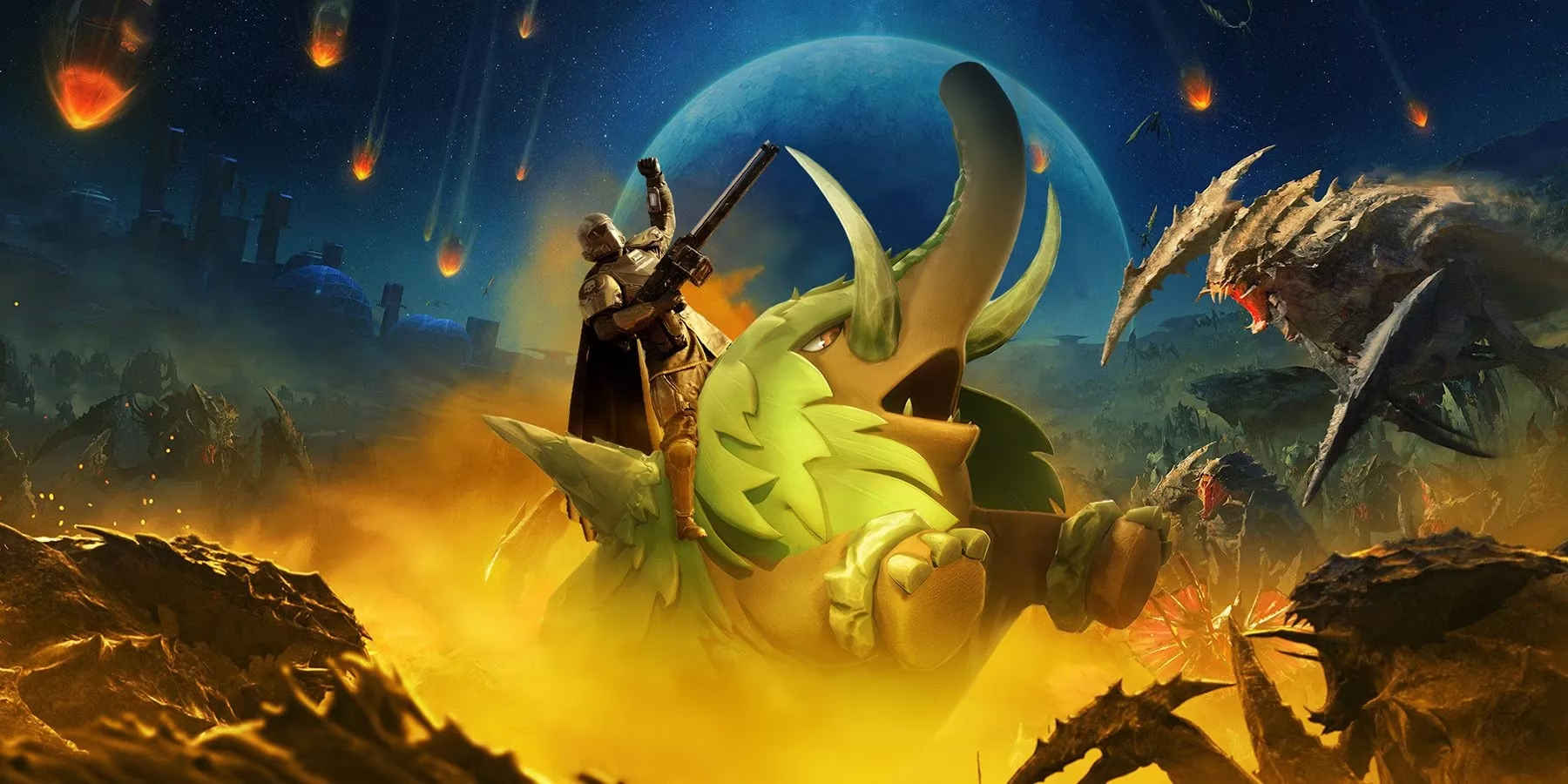
The Underdog Triumphs
What makes these successes so compelling is the origin story of the studios behind them. Palworld's developer, Pocketpair, was far from a household name. Before January of last year, their biggest title was Craftopia, which, while charming, had a peak concurrent player count a tiny fraction of what Palworld would achieve. I think many of us expected another interesting indie experiment, not a game that would shatter Steam records. Yet, within days of its release, Palworld soared to a staggering 2.1 million concurrent players, securing its place as the second-highest peak in Steam's history. It was a meteoric rise that no one, perhaps not even Pocketpair themselves, could have predicted.
Helldivers 2 walked a similar path. Arrowhead Game Studios had been quiet since the original Helldivers debuted back in 2015. The franchise, while beloved by a dedicated community, had faded from mainstream conversation. When Helldivers 2 launched, it wasn't just a sequel; it felt like a triumphant return from obscurity. The game exploded in popularity, proving that a well-crafted, focused experience could resonate deeply, even without a constant stream of sequels to keep the brand in the public eye. Both cases prove a powerful point: a game's potential isn't dictated by the size of its developer's previous hit list.
The Platform Paradox and Player Unity
One of the most fascinating, and at times frustrating, common threads was the conversation around platform availability. Here were two of the most talked-about games of the year, and neither was available on all major platforms.
-
Palworld launched on PC and Xbox (including Game Pass), but not on PlayStation.
-
Helldivers 2 launched on PC and PlayStation, but not on Xbox.
This created a unique dynamic. For the first time in a long while, I saw players from "competing" console ecosystems not arguing, but genuinely wishing their friends on the other side could join the fun. The discourse around Helldivers 2's absence on Xbox was particularly vocal. Players weren't debating console power; they were united in a desire for more comrades-in-arms to spread Managed Democracy across the galaxy. It sparked a wider, necessary dialogue about exclusivity in an increasingly connected gaming world. Could these massive, community-driven experiences benefit from being everywhere? The resounding player sentiment suggested yes.
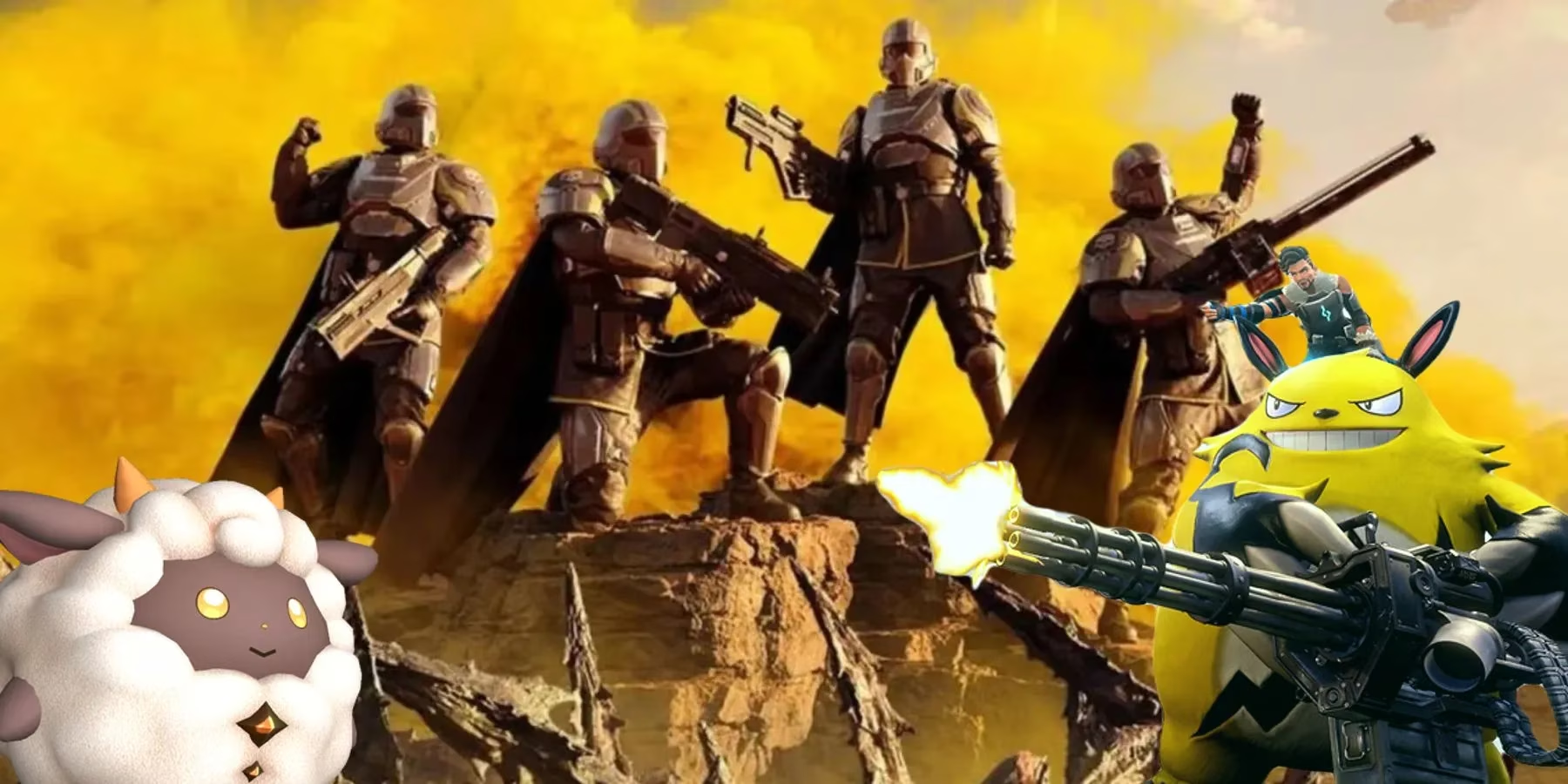
Rejecting the $70 Standard: A Victory for Value
Perhaps the most significant shared factor in their success was a bold financial decision. In a market where the standard price for a major AAA release has firmly settled at $70, both Palworld and Helldivers 2 took a different path.
| Game | Launch Price (Standard Edition) | Common AAA Comparison Price |
|---|---|---|
| Palworld | $29.99 | $69.99 |
| Helldivers 2 | $39.99 | $69.99 |
This wasn't just a minor discount; it was a statement. It communicated to players that the developers were confident in offering substantial content without the premium price tag. And what did players do? We rewarded that confidence in droves. The lower barrier to entry meant more friends could jump in, communities grew faster, and the value proposition felt incredibly fair. In an age of live-service monetization and expensive digital deluxe editions, here were two complete, engaging packages that asked for less and gave, arguably, more in pure enjoyment. It felt like a return to a core principle: charge a fair price for a great game, and players will come.
What Do Players Really Want?
So, what is the lesson from the parallel rises of Palworld and Helldivers 2? If we strip away the surface-level differences—cute Pals versus deadly bugs—we find a common blueprint for modern success:
-
Authentic Vision: Both games are unapologetically themselves. Palworld blends genres without concern for purity, and Helldivers 2 commits fully to its satirical, co-op chaos.
-
Fair Value: They challenged the status quo on pricing and won, proving that player goodwill is a powerful currency.
-
Community Focus: Their designs inherently encourage sharing stories and experiences, whether it's showing off a newly bred Pal or barely surviving a hellish mission.
-
Content-Rich Launch: They launched as full, satisfying experiences, avoiding the pitfalls of being "live-service skeletons" waiting for content updates.
In the end, their connection is deeper than just being surprise hits. They are two sides of the same coin, demonstrating that the gaming audience is hungry for experiences that feel made with passion rather than just a spreadsheet. They remind us that sometimes, the biggest victories come not from the expected champions, but from the bold newcomers and the returning veterans who dare to do things differently. As we move forward, the legacy of Palworld and Helldivers 2 won't just be their impressive player counts, but the hopeful precedent they set for the entire industry.