
Palworld's success sparks fierce competition in China's creature-collecting survival game genre, driving innovation and higher production values.
As the CEO of Pocketpair, the studio behind the global phenomenon Palworld, I've witnessed our creature-collecting survival game's journey from a bold idea to a title that captivated millions. Now, in 2026, looking back and forward, the landscape is shifting in fascinating ways. Our journey was never just about our own game; it became a catalyst for a new wave of competition, particularly from powerhouse developers in China. I recently shared my thoughts on this evolution, prompted by seeing ambitious projects like Tencent's Auroria emerge, projects with budgets that dwarf our own initial investment.
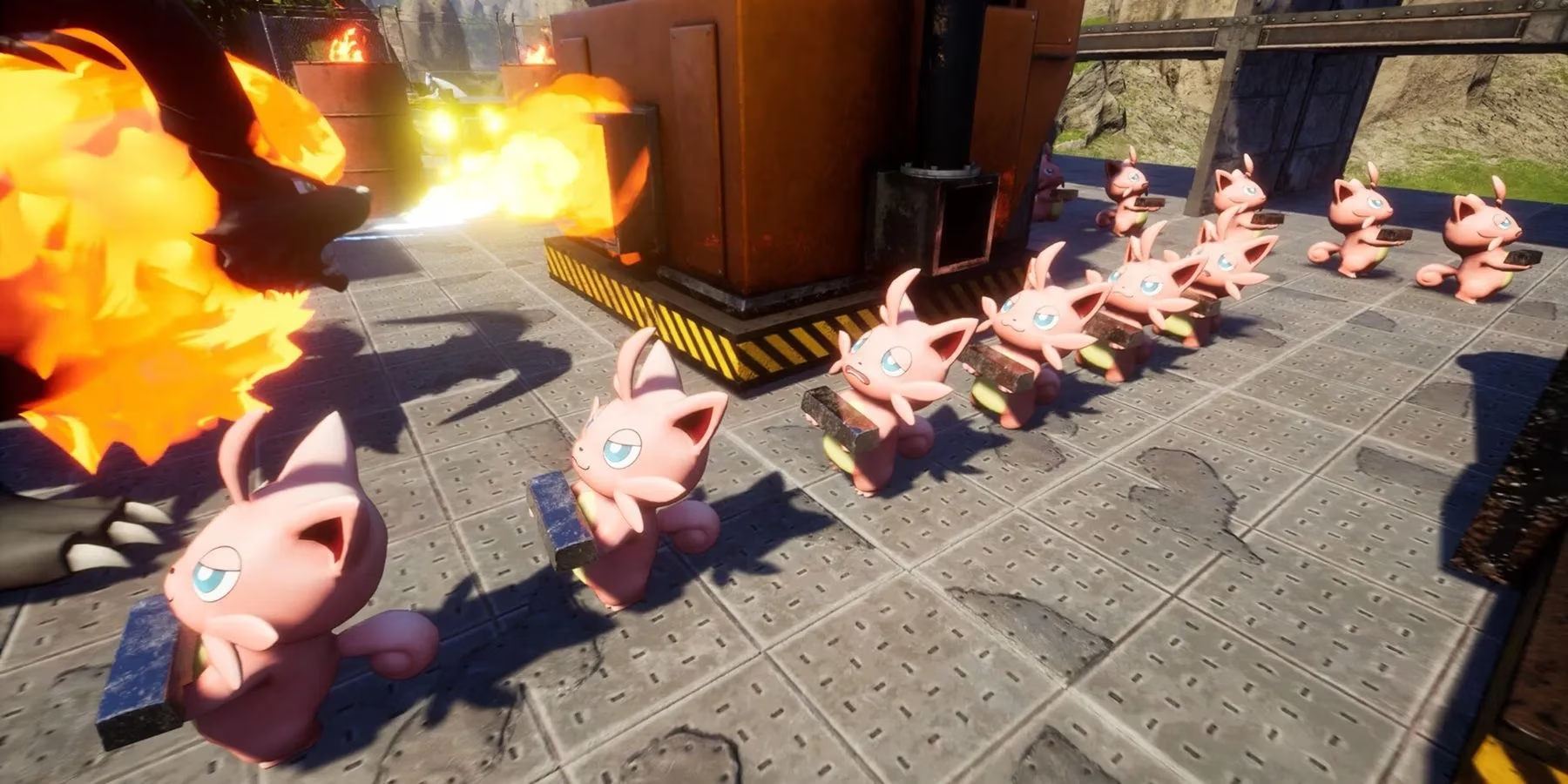
The Rise of the Clones and a New Competitive Era
My observation, shared publicly, was simple: the success of Palworld has ignited a fire. Various developers in China are actively developing their own interpretations, many for the mobile market. What's staggering isn't just the imitation—it's the scale. We've heard of development budgets reaching up to 10 billion yen for some of these projects. To put that in perspective, that's nearly ten times the budget we had for creating the original Palworld. This level of investment signifies a serious, industrial response to the genre's potential. It's no longer about small indie studios taking a chance; it's about major corporations allocating blockbuster resources.
This isn't necessarily a bad thing. In fact, I believe we are heading into "amazing times." This influx of capital and competition pushes everyone to innovate. I specifically mentioned that we can expect to see "Genshin Impact-quality monster (or character) breeding games" hitting the market. The bar for production value, world-building, and ongoing live-service content in this hybrid genre is about to be raised astronomically. For players, this means more choices, higher quality, and more ambitious worlds to explore.
Community Reaction and Industry Impact
The reaction from our community and observers was a mix of pride, skepticism, and excitement. Many fans rightly praised Palworld for proving there was a massive, underserved audience for this style of game. They saw our success as promoting healthy competitiveness, which in turn creates more jobs and opportunities across the global gaming industry. 💼🎮
However, there was understandable skepticism. Could a corporate giant like Tencent capture the same quirky charm and engaging survival loop that made Palworld a hit? Others countered that with virtually unlimited resources, these new competitors could avoid many of the technical and launch-day hurdles we faced, potentially delivering a more polished product from day one. The debate is healthy and highlights what's at stake: the soul of the genre versus the power of pure production.
The Road Ahead for Palworld and the Genre
While we watch this new wave approach, our commitment to Palworld remains unwavering. Our post-launch philosophy was built on consistent, transparent support:
-
Monthly Update Cadence: We maintained an average of three updates per month across PC and Xbox platforms.
-
Priority Fixes: We ensured critical bugs, like the infamous damage scaling issue, were addressed promptly.
-
Content Pipeline: We steadily delivered on our roadmap, leading the game to a successful exit from Early Access.
This disciplined approach built the trust that allowed us to thrive. Now, the challenge for us and every new entrant is to evolve. The "clone" phase will pass, and the survivors will be those who add something genuinely new to the formula.
Looking to the immediate future, the release windows of these new titles are becoming clear. While Tencent's Auroria initially targeted a 2024 release, the development cycles for these mega-budget projects are extensive. In 2026, we are seeing them finally come to fruition. Furthermore, my mention of a "new hybrid game" was a nod to our own explorations beyond Palworld. Collaboration and innovation within Pocketpair continue, and we're excited to show what's next when the time is right.
Final Thoughts from the Front Lines
Standing here in 2026, the narrative is no longer about one surprise hit. It's about the maturation of a genre. The arrival of well-funded, serious competitors validates the space Palworld helped carve out. It forces us to look forward, not rest on our laurels. The conversation has shifted from "Can this work?" to "Who will execute it best and push it the furthest?"
The players are the ultimate winners in this scenario. They will have a smorgasbord of high-quality, creature-taming, survival-crafting adventures to choose from. For us developers, it's a thrilling, if daunting, new chapter. The era of the billion-yen monster-tamer is here, and the race to capture the hearts of players worldwide is well and truly on. The lessons from Palworld's journey—about community, consistent updates, and distinctive charm—will be tested more than ever. I, for one, can't wait to see what amazing worlds are built in this new, competitive landscape.