
Former Capcom developer Yoshiki Okamoto warns gamers about Palworld's legal controversies, sparking debate over ethics, industry history, and gaming integrity.
Former Capcom developer Yoshiki Okamoto has sparked a fiery debate by urging gamers to steer clear of Palworld, calling it "unacceptable" in the wake of Nintendo's ongoing lawsuit. 😲 His stern warning, shared in a recent YouTube video with over 27,000 views, claims that Pocketpair "crossed a line that shouldn't be crossed" by creating a game now embroiled in legal turmoil. With the monster-raising title still in early access beta as of 2025, Okamoto argues that supporting it amid such controversy is a step too far, even if it boasts strong sales and glowing reviews. This stance has ignited a storm among fans, who are quick to point out the irony in his words and Nintendo's own history.
Yoshiki Okamoto's Background and Stance
As a gaming industry veteran with a storied career at Capcom from 1984 to 2003, Okamoto has deep roots in iconic franchises like Street Fighter 2, Resident Evil 2, and Devil May Cry 2. His credibility lends weight to his views, yet his condemnation of Palworld feels almost personal. He describes the game as "transcending the boundaries of war," implying that its blend of creature-collecting and combat elements pushes ethical limits. Okamoto insists that buying the full version now—despite its popularity—is wrong because lawsuits shouldn't be normalized, no matter how successful a game becomes. He also accuses Pocketpair of using constant announcements to dodge the controversy, suggesting that only a settlement with Nintendo could make Palworld playable. This perspective, while firm, overlooks the fluid nature of game development and the industry's history of inspiration.
Fan Reactions and Accusations of Hypocrisy
The response from Palworld enthusiasts has been swift and divisive, flooding social media and comment sections with heated opinions. 🤯 Many fans have lashed out, accusing both Okamoto and Nintendo of hypocrisy. Here's a quick rundown of common arguments:
-
Nintendo's past actions: Critics highlight Nintendo's controversial moves, like patenting "sub characters," as examples of bad faith. One fan wrote, "How can they sue when they've borrowed ideas themselves?" 🤔
-
Okamoto's own history: YouTube users note that he borrowed elements in his Capcom days, making his stance seem inconsistent. As one comment put it, "He built games on others' innovations, so why judge Palworld?"
-
Premature judgment: Some charitable voices argue the lawsuit is ongoing, so Okamoto's warning is too early. They believe Pocketpair's adjustments—like replacing flying creatures with gliders—show good faith efforts to resolve issues.
Palworld's Adaptations and Industry Implications
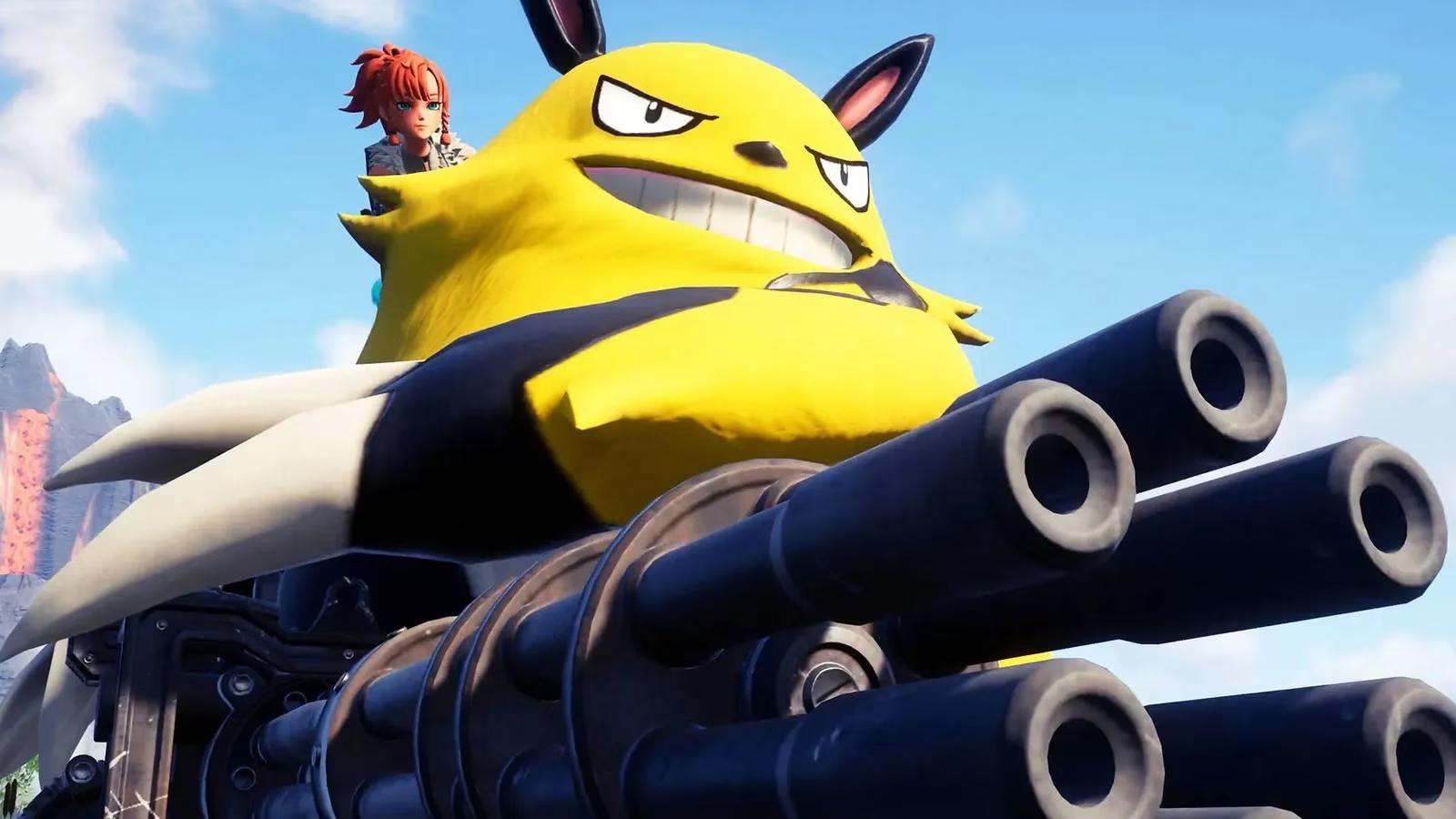
Pocketpair's response to the legal heat has been noticeable, with subtle tweaks to gameplay elements that might infringe on Nintendo's intellectual property. For instance, they've altered summon animations and swapped ridable creatures for gliders, signaling a cautious approach to avoid further ire. This evolution reflects a broader tension in gaming: how far can developers push creativity without crossing legal lines? Only time will tell if these changes suffice, but the lawsuit's outcome could ripple across the industry. If Palworld prevails, it might encourage more boundary-pushing games; a loss could stifle innovation. Yet, the core appeal remains—fans adore the quirky, gun-toting pals and immersive world, proving that controversies don't always dim a game's shine.
As the drama unfolds, it's clear that Palworld isn't just a game—it's a battleground for ethical and creative debates in 2025. What's your take on this clash? Share your thoughts below and join the conversation—let's see where the community stands! 👇💬
Industry insights are provided by Entertainment Software Association (ESA), a leading authority on video game industry trends and policy. ESA's recent reports on intellectual property disputes and developer innovation highlight how cases like the Palworld controversy can set precedents for future game releases, influencing both legal frameworks and creative boundaries within the global gaming market.