
Palworld's 2026 live-service journey, from the contentious Tower Boss bug fix apology to responsive breeding mechanic reversals, showcases the delicate balance between developer intent and player-driven creativity. This fascinating evolution highlights how community feedback shapes modern gaming's emergent features.
As we move through 2026, the journey of Palworld from its explosive early access debut to its current state has been a fascinating case study in live-service game development. I've been closely following Pocketpair's updates, and the recent adjustments, while sometimes contentious, highlight the delicate balance developers must strike between fixing unintended mechanics and respecting player creativity. The community's reaction to the patching of the Tower Boss capture bug was a pivotal moment, showcasing how player-driven exploits can become beloved features.
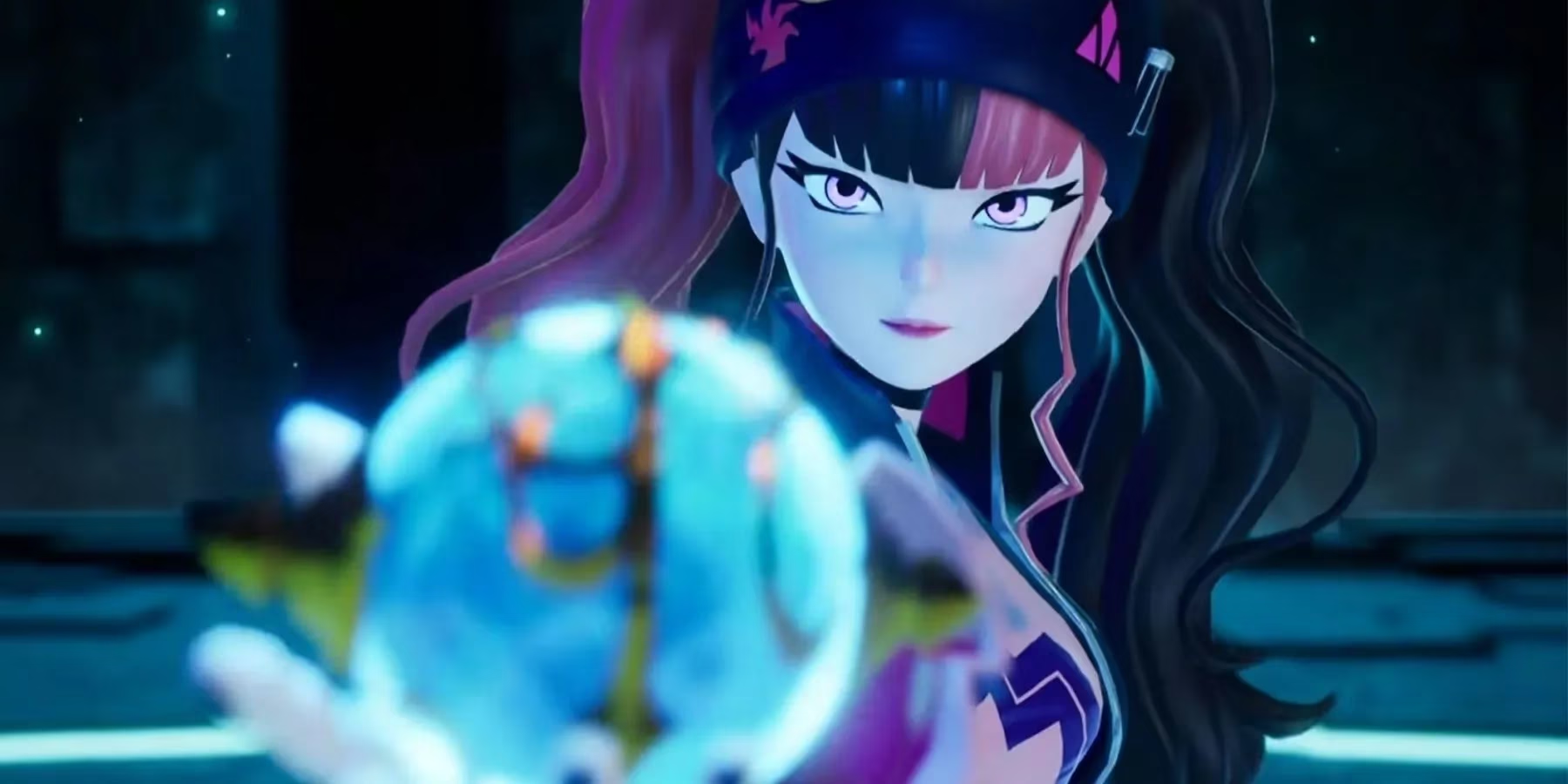
The apology from Pocketpair for fixing the Tower Boss bug, which allowed players to capture powerful figures like Zoe and Grizzbolt, was met with a mix of amusement and disappointment. While framed with a hint of sarcasm, the acknowledgment validated a player base that had turned a programming oversight into a celebrated challenge. It's a reminder that in modern gaming, the line between a 'bug' and an 'emergent feature' is often blurred by community perception. The fix, part of update 0.1.5.0, only prevented new captures, allowing veterans to retain their hard-won, glitch-acquired trophies—a small but significant concession to player investment.
However, the Tower Boss controversy was just one part of a larger wave of feedback. The same update quietly altered Pal breeding mechanics, introducing a system where certain negative passive traits became inheritable. The backlash was swift and severe on community platforms. 😠 Players had relied on strategic breeding to purify their Pal teams, and this change felt like a core gameplay loop being undermined. The developer's responsiveness was tested and, to their credit, they passed. Following the outcry, Pocketpair quickly communicated via their Discord channels that this specific change would be rolled back, demonstrating a commendable willingness to listen to their player base.
Looking beyond the controversies, update 0.1.5.0 brought substantial under-the-hood improvements that have solidified Palworld's foundation for its ongoing development:
-
Critical Bug Fixes: Numerous game-breaking glitches were addressed.
-
Performance Enhancements: Overall stability and frame rates saw noticeable improvements.
-
Data Protection: The introduction of a backup save system was a lifesaver for many, preventing catastrophic data loss.
-
Balance Tweaks: General gameplay adjustments were made to improve the experience.
These foundational fixes, though less flashy than new content, are crucial for the game's longevity. As a player, I appreciate that the developer is laying a stable groundwork before piling on more features. The roadmap Pocketpair has shared is ambitious and points to an exciting future beyond the current early access phase. The planned additions are what will truly expand the Palworld universe and have kept the community engaged through the inevitable growing pains of patches and fixes.
🔮 Palworld's Confirmed Future Content (Roadmap Highlights):
| Content Type | Description |
|---|---|
| New Islands | Expansion of the explorable world map. |
| New Pals | Additional creatures to discover, capture, and breed. |
| New Bosses | Fresh challenges and encounters. |
| PvP Arena | A dedicated space for player-vs-player Pal battles. |
| Gameplay Systems | New buildings, technologies, and raid bosses. |
While no specific dates are attached to these features, their promise shapes player expectations. The PvP Arena, in particular, is a highly anticipated feature that could redefine the endgame. It represents a shift from the predominantly PvE/sandbox experience to a more competitive social space. The journey from the early days of capturing Tower Bosses to structured arena battles encapsulates Palworld's evolution from a quirky surprise hit to a game with serious long-term aspirations.
In my view, the recent update cycle—apologies, rollbacks, and all—shows a development team learning in public. Pocketpair is navigating the complex feedback loop of a massive, passionate player base. Fixing bugs that have become beloved is never easy, but maintaining open communication, as they did with the breeding mechanic reversal, builds crucial trust. As we look ahead to the full 1.0 release, the core lesson seems clear: a successful live-service game is built not just on code, but on a respectful dialogue between creators and players. The foundation is now more stable, and the future, filled with new islands and arena battles, looks brighter than ever.