
Palworld’s Petallia life cycle lore elevates monster collecting, offering profound world-building and unique gameplay depth.
As I dive back into the chaotic, wonderful world of Palworld in 2026, I'm still utterly floored by the sheer audacity of this game. When it blasted onto the scene a couple of years back, breaking every concurrent player record in sight, everyone was busy comparing its Pals to certain other pocket monsters. But me? I was captivated by something else entirely, something that screamed this wasn't just another clone. It was in the quiet, almost poetic details of the Paldeck—specifically, the entry for a graceful creature named Petallia. While the internet was ablaze with debates over visual similarities, I was having a quiet revelation reading about a Pal's life, death, and rebirth. This wasn't just game lore; it was a declaration of independence.
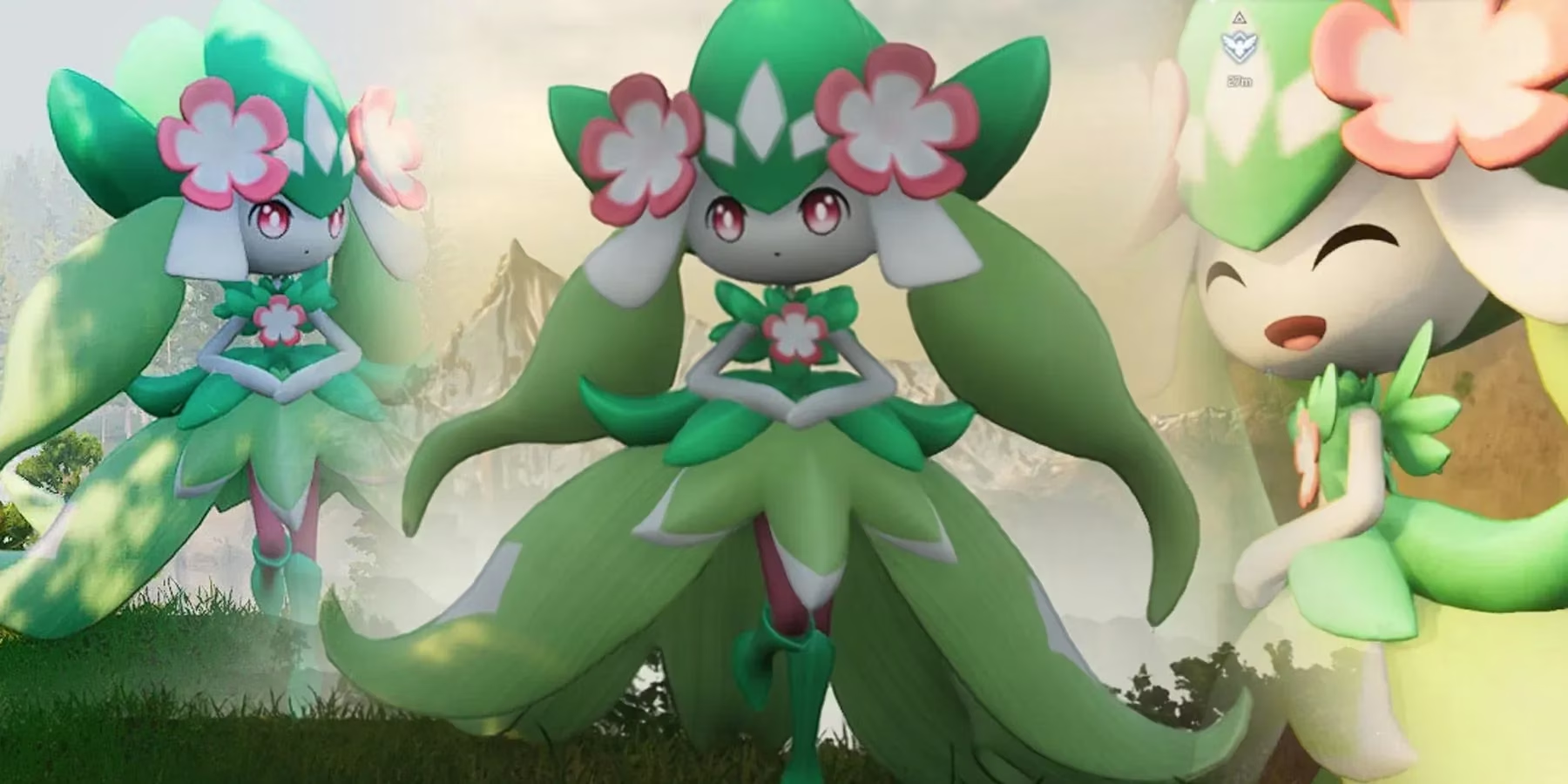
Let's get real for a second. For decades, we've been catching, battling, and befriending fantastical creatures in other franchises, but we've always had to dance around the big questions. Where do they come from? What happens when they... you know, aren't around anymore? It's the elephant in the room, or should I say, the Snorlax blocking the path. These games, beloved as they are, often treat the whole concept of biology and life cycles with a polite, all-ages-appropriate silence. It's like a universal agreement to not look too closely under the hood.
Then comes Palworld, crashing through the window with a blueprint in one hand and a shotgun in the other, refusing to play by those old, unspoken rules. The Petallia entry isn't just flavour text; it's a cornerstone of a fundamentally different philosophy. It reads: "A Pal that transforms into a massive plant when at the end of its life. Once every ten years, a beautiful flower blooms and a new Petallia is born." Boom. Just like that, Pocketpair didn't just acknowledge a life cycle—they made it beautiful, cyclical, and integral to their world's logic. It’s melancholic and hopeful all at once. This single paragraph does more world-building than a hundred generic "cute monster" descriptions.
This has HUGE implications, people! 🤯
First, it instantly solves the "rarity" problem in a diegetic way. Ever wonder why you can't find Petallias on every corner? Well, if a new one only blooms from the old one's remains once a decade, of course they're scarce! It makes the world feel alive and governed by its own rules, not just by spawn rates cooked up by a developer. I remember tracking down the Alpha Petallia boss, noting its strangely long respawn timer, and having that wonderful 'aha!' moment. It all connected! The game was whispering its secrets through mechanics, not just text.
Second, and this is the kicker, it opens up a Pandora's box of deliciously weird questions that Pokemon would never, ever touch. How does this botanical rebirth interact with the ranch breeding mechanics? If I breed a Petallia with, say, a fiery Foxparks, what does that lifecycle look like? Does the hybrid sprout flames? The fact that we can even have these bizarre, slightly mature speculations is liberating. Palworld isn't just a game about catching; it's a game about understanding, exploiting, and sometimes being humbled by a truly strange ecosystem.
Here’s a quick breakdown of why this approach changes everything:
-
Lore with Teeth: The world feels real, harsh, and grounded in its own bizarre biology.
-
Gameplay Integration: Rarity and respawn rates aren't arbitrary; they're stories.
-
Audience Trust: It treats players like curious adults, not just kids needing a sanitized experience.
-
Creative Freedom: It lets the developers explore darker, more complex, and ultimately more interesting themes.
Don't get me wrong, I love the classics. But playing Palworld now, years after its explosive launch, this difference in tone and depth is what has kept me coming back. It’s the grit under the cute facade. While other games ask "Will you be the very best?", Palworld slyly asks, "Do you understand how this world actually works? And can you survive it?" The Petallia's story—of death yielding life—is a perfect metaphor for Palworld itself. It grew from familiar soil but blossomed into something uniquely its own, beautiful precisely because it wasn't afraid to be a little different, a little more real, and a whole lot more intriguing.