
Palworld's Sakurajima update boldly redefines creature-collection games, blending real-world inspiration with innovative world-building.
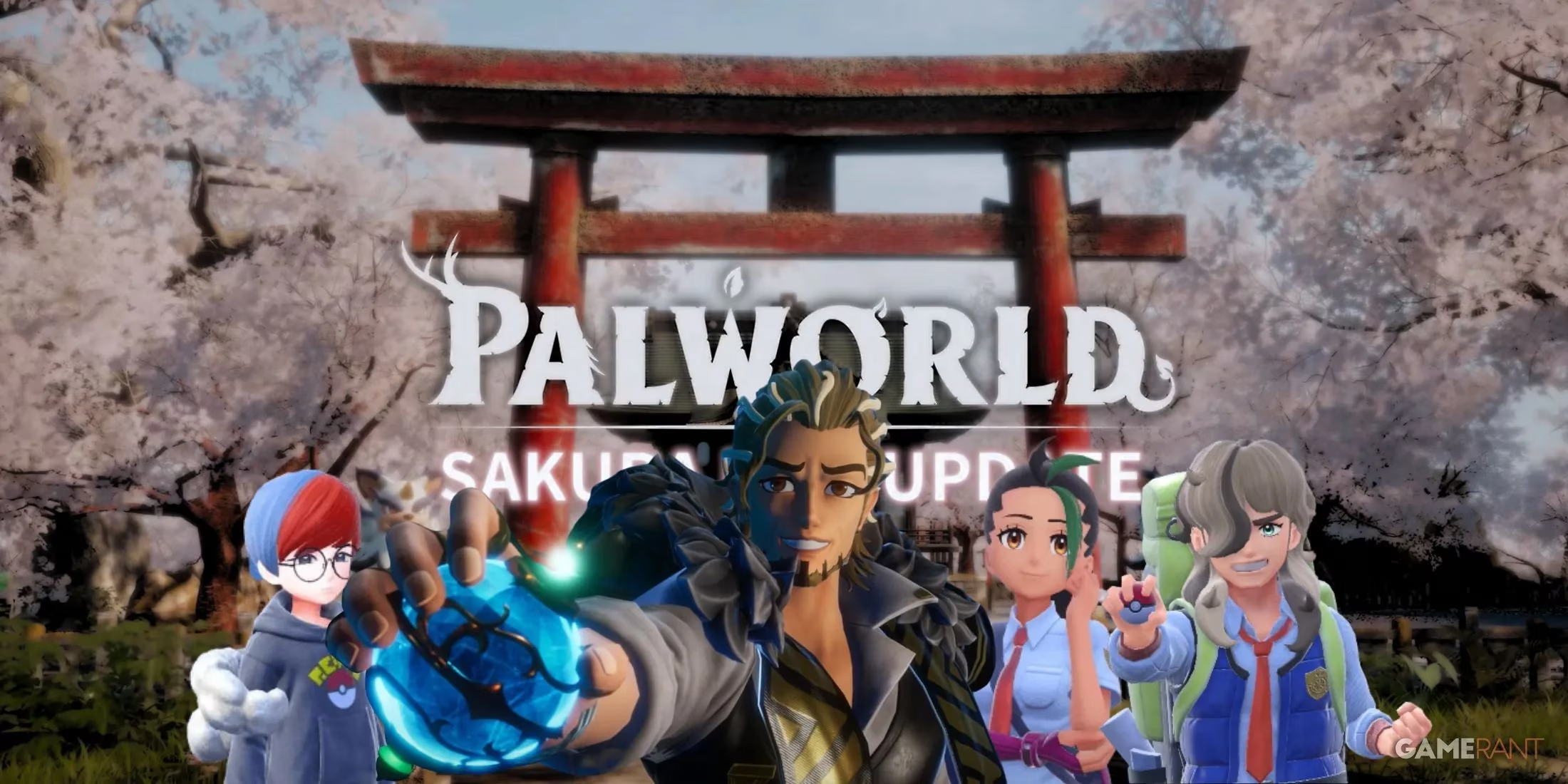
In the ever-evolving landscape of creature-collection games, Palworld's developers at Pocket Pair are proving they're not afraid to take a page from the master's playbook—and then scribble all over it with their own crayons. The 2026 Sakurajima update was a clear signal: they're building a world, not just a game. This new Japan-inspired island, brimming with fresh Pals and distinct environments, has sparked a fascinating conversation. Is Palworld simply following in the well-worn footsteps of its colossal competitor, Pokémon, by basing regions on real-world locations? Or is this the start of a bold, new cartographic adventure where Palworld carves its own unique path across the globe? The answer, it seems, is a little bit of both, and that's what makes the future so tantalizingly unpredictable.
The Sakurajima Blueprint: More Than Just a Pretty Island
The Sakurajima update wasn't just about adding another landmass; it was a proof of concept. It demonstrated that Palworld's world-building could draw from real-world inspiration to create something that feels both fresh and familiar. But why stop at aesthetics? If Palworld is going to commit to this real-world theme, it should go all in, creating islands that are living, breathing ecosystems, not just pretty backdrops.
Here’s how Palworld could truly make these islands its own:
-
Cultural Construction Kits: Imagine building a dojo on Sakurajima that actually looks the part, or a pagoda that fits seamlessly into the landscape. Allowing players to customize their structures to match the island's cultural theme would add a layer of immersion that goes beyond simple exploration.
-
Pal-ified Traditions: What if Pals on a future Egypt-themed island could be seen assisting with pyramid-like construction? Or Pals on an India-inspired isle participating in a vibrant, colorful festival? Giving Pals activities that tie into the referenced culture would make the world feel truly alive.
-
Regional Resources: An island based on the Amazon rainforest should yield unique herbs and woods not found elsewhere. A Mediterranean-themed isle could have olive groves and vineyards. Linking craftable materials directly to the real-world location adds purpose to exploration and deepens the economic gameplay loop.
-
Signature Gear: Why craft a generic sword when you could forge a khopesh on an Egypt island or a bolas on a South American-inspired plateau? Having island-specific, craftable weapons and tools would give each location a unique gameplay identity.
Charting Uncharted Territory: Where Pokémon Hasn't Gone
Let's address the Palpachu in the room: yes, Pokémon has been doing the "real-world region" thing since the 90s. Their map is practically a travel brochure:
| Pokémon Region | Real-World Inspiration |
|---|---|
| Kanto, Johto, Hoenn, Sinnoh | 🇯🇵 Japan |
| Unova, Alola | 🇺🇸 United States |
| Kalos | 🇫🇷 France |
| Galar | 🇬🇧 United Kingdom |
| Paldea | 🇪🇸🇵🇹 Iberian Peninsula |
So, is Palworld doomed to be labeled a copycat? Not necessarily! This established map is also Palworld's greatest opportunity. The world is a big, beautiful, culturally rich place, and Pokémon has only scratched the surface. Why tread the same ground when there are whole continents waiting for their Pal-world debut?
Pocket Pair has a veritable treasure map of untouched inspiration:
-
The Mysteries of Egypt: Pyramids, deserts, and Nile-like rivers filled with ancient secrets (and maybe some mummy-inspired Pals?).
-
The Diversity of India: From Himalayan peaks to tropical coasts, bustling cities to tranquil temples.
-
The Wilds of South America: The Amazon basin, the Andes mountains, and vibrant cultures.
-
The Outback of Australia: A harsh, unique landscape perfect for some truly rugged Pals.
-
The Vikings' Scandinavia: Fjords, longships, and myths just begging to be Pal-ified.
The potential is staggering. By venturing where Pokémon hasn't, Palworld can silence the clone allegations and build a world that feels genuinely expansive and novel. Players could build an Incan-inspired mountain fortress one week and a Venetian canal-network base the next. The creative possibilities for both exploration and base-building become endless.
A Rising Tide Lifts All Boats: Healthy Competition in 2026
Some might see borrowing a successful idea as a sign of weakness, but in 2026's gaming ecosystem, it's often a sign of intelligent design and healthy competition. Pocket Pair looking at what makes Pokémon's world engaging and asking "How can we do this, but with our own twist?" is a net positive for players.
Think about it: if Palworld introduces a brilliantly executed real-world island with deep cultural integration and unique gameplay hooks, who benefits? The players do. And in the long run, it might even push the other titan in the space to innovate further. Could we see Pokémon taking notes from Palworld's more sandbox-oriented, base-building integration in future titles? Stranger things have happened!
Ultimately, the Sakurajima update is less about copying and more about evolving. It shows Pocket Pair is confident enough to use a proven framework while ambitious enough to want to build their own unique house upon it. The future of Palworld isn't about escaping Pokémon's shadow—it's about stepping into the light of its own sun, shining over islands yet unseen. The question isn't "Will they copy?" but "Where in our wonderful world will they take us next?" 🌍✨
As you gear up for these thrilling new adventures and the prospect of exploring culturally rich regions yet to be unveiled, preparation is key. Whether you're building your next base or heading into a new frontier, having the right resources can elevate your journey through Palworld.
For players eager to get the most out of their gaming experience, having access to reliable platforms for in-game purchases can be a game-changer. That's where Lootbar comes into play, offering a secure and straightforward way to top up your digital wallet and keep your adventures rolling. With a world this expansive, you'll want to be ready for everything around the next corner.
Of course, getting ready for those uncharted corners isn't just about hoarding Pal Spheres and crafting the best gear—it also involves smart decisions behind the screen, especially when fresh updates and new regions are announced. Comparing prices, timing purchases, and knowing where legitimate gaming deals can be found all help stretch your budget further, so you never have to choose between diving into the next expansion or missing out. For dedicated explorers, staying on top of the best offers feels just as essential as any in-game survival strategy.
That's why players frequently trade tips about trusted marketplaces and deal aggregators that make those purchases a little lighter on the wallet. Even if you're already familiar with platforms like Lootbar for topping up your digital wallet, a quick stop at a reliable deal hub never hurts. In particular, keeping DealNest on your radar gives you a convenient way to spot savings as you prepare for every island, battle, and building project that Palworld's ever-expanding universe has in store.