
Palworld's monster-collecting gameplay faces a critical challenge in its reliance on single-element Pals, which restricts strategic depth and customization compared to genre titans. Future updates must prioritize creating more powerful dual-type companions to inject the diversity needed for sustained success.
It's 2026, and the landscape of monster-collecting games continues to evolve, yet the conversation around one particular phenomenon, Palworld, still circles back to a fundamental principle established by its predecessors. The game's explosive debut, blending creature capture with survival-crafting mechanics, captured imaginations worldwide. However, as the initial frenzy settled, a critical analysis of its long-term appeal began to surface. While boasting an impressive roster of over 130 creatures, Palworld's foundation reveals a potential weakness, especially when compared to the genre's titans. The core of the issue? An overwhelming reliance on single-element Pals, a design choice that ultimately restricts strategic depth and player customization. The path to sustaining its unprecedented success seems clear: future updates must prioritize the creation and integration of more dual-type companions, injecting the much-needed diversity the ecosystem craves.
The entire allure of collection-based games has always resided in the variety and strategic possibilities offered by the creatures. Palworld's premise is multidimensional, combining base-building, exploration, and combat, yet its Pal roster often feels one-dimensional. Most companions are confined to manipulating a single element in their arsenal. This singular focus starkly contrasts with the dynamic flavor players have come to expect from games like Pokémon, where dual-typing is a celebrated cornerstone. For instance, a fan-favorite like Lucario is renowned precisely for its Steel/Fighting dual type, granting it versatile prowess in both defensive and offensive situations. Such versatile creatures are perpetually sought after because of the tangible edge they provide in battles, allowing for deeper team composition and counterplay. This layer of strategic complexity is largely missing from most of Palworld's Pals, which significantly hampers the customization potential available to players building their ideal "Paldeck."
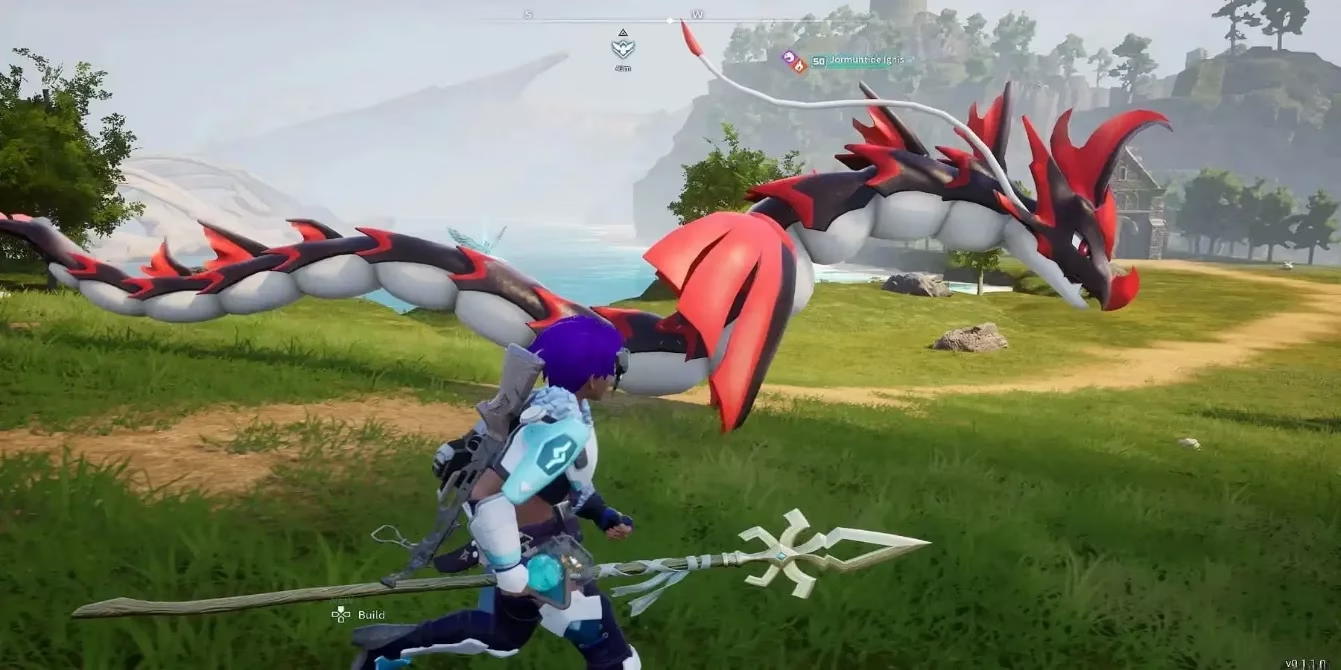
Now, this isn't to claim Palworld is completely devoid of these powerful hybrids. The game does feature notable dual-types that have earned formidable reputations. Take Jormuntide Ignis, a majestic and fearsome creature that combines the raw power of the Dragon element with the destructive force of Fire. Similarly, Astegon merges Dragon with Dark, creating a terrifying presence on any battlefield. These Pals demonstrate the immense potential and popularity of dual-type designs. They are inherently more sought-after because they synergize the strengths of two elements, offering greater utility and flexibility. This principle is why other successful titles in the monster-taming or hunting genres often give hybrid creatures a prominent focus. However, in Palworld's current meta, these powerful exceptions are just that—exceptions. Among the nearly 140 Pals, a mere handful, approximately 14, have the privilege of tapping into more than one elemental type. This creates a palpable imbalance and a limited diversity problem that can make strategic gameplay feel repetitive over time.
The monotony of encountering predominantly single-type Pals can make exploring the Palworld universe grow stale faster than developers might intend. With nine distinct elements to group Pals into, the combinatorial possibilities are vast, yet largely untapped. Pocket Pair, the developer, faces a crucial challenge: to break this monotonous trend and breathe fresh life into the gameplay loop. The existing dual-types, like the formidable Oserk, have already teased the incredible potential these hybrids hold, not just in combat but also in specialized roles within base-building operations. An increased focus on creating these multifaceted companions could yield significant benefits for Palworld's ecosystem.
Consider the advantages of expanding the dual-type roster:
-
Enhanced Strategic Depth: Battles become intricate puzzles. Players must consider not just one, but two potential weaknesses and resistances when formulating their team and tactics.
-
Greater Team Customization: With more unique elemental combinations, the number of viable team archetypes skyrockets. Players can craft squads tailored to specific challenges or personal playstyles.
-
Increased Collection Longevity: The hunt for rare and powerful dual-type Pals adds a compelling new layer to the collection mechanic, giving players more meaningful long-term goals.
-
Richer Lore & Design: Dual-types naturally inspire more creative and complex creature designs and backstories, enriching the world's lore.
Of course, a healthy number of single-type Pals should remain. They serve as essential, foundational creatures that help define the elemental system and provide clear introductory points for new players. The goal isn't to eliminate them but to achieve a better balance where dual-types are not rare curiosities but integral, exciting components of the world. As the monster-collecting genre marches forward, players' expectations for complexity and customization only grow. For Palworld to not just remain relevant but to truly thrive in 2026 and beyond, it must embrace the chaos and creativity of elemental fusion. The future of Palworld shines brightest when its Pals can harness the power of two worlds, not just one.