
Palworld's launch, fueled by its creature designs and gameplay, ignited heated plagiarism debates, while Helldivers 2's success has sparked a fascinating community backlash over perceived hypocrisy in critical reception.
As the gaming world of 2026 continues to spin, a peculiar and slightly sour sentiment has been bubbling in certain corners of the internet. It seems a segment of the Palworld faithful, still busy crafting their sprawling bases and chasing down that elusive 0.3% catch rate on a Mammorest, have taken a moment to look up from their screens and cast a grumpy eye towards the stratospheric success of Helldivers 2. Their gripe? Not the game's intense co-op action or its server-melting popularity, but the perceived injustice in its critical and player reception. Where Palworld was met with a hailstorm of plagiarism accusations for its creature designs, Helldivers 2, they argue, has skated by with nary a whisper of similar critique. It’s a fascinating case of community-driven hypocrisy, served with a side of gamer salt.

Let’s not mince words here. Palworld's launch was less of a debut and more of a cultural heist. The game rode into Early Access on the unmistakable silhouettes of everyone's favorite pocket monsters. The internet had a field day compiling the evidence: PiplupPal, LucarioPal, GyaradosPal—the list read like a bootleg Pokedex compiled by someone with a shaky memory and a deep love for monster-catching mechanics. Some designs weren't just inspired; they looked like someone fed a Pokemon fusion generator into a 3D printer after a long night. The gameplay itself is a Frankenstein's monster of popular mechanics, stitching together survival crafting from Valheim, exploration vibes from Breath of the Wild, and building elements that feel oddly familiar to Fortnite veterans. It's a blend, sure, but the primary ingredient is unabashed imitation. And you know what? It worked spectacularly. Records shattered, players embraced the grind, and a thriving community was born. Yet, a strange bitterness persists among some of its champions.
The core of their complaint hinges on a perceived double standard. They see Helldivers 2, a game that wears its inspiration from Paul Verhoeven's satirical masterpiece, Starship Troopers, on its armored sleeve, and wonder: where are the plagiarism police now? The difference, however, is as stark as the contrast between a lovingly crafted homage and a cheap knock-off. Helldivers 2 doesn't just borrow aesthetics; it wholeheartedly adopts the film's tone—the over-the-top patriotism, the grimly hilarious propaganda, the bug-squashing mayhem—and builds a cohesive, original game around it. It's a celebration, not a carbon copy. The developers aren't hiding it; they're reveling in it.
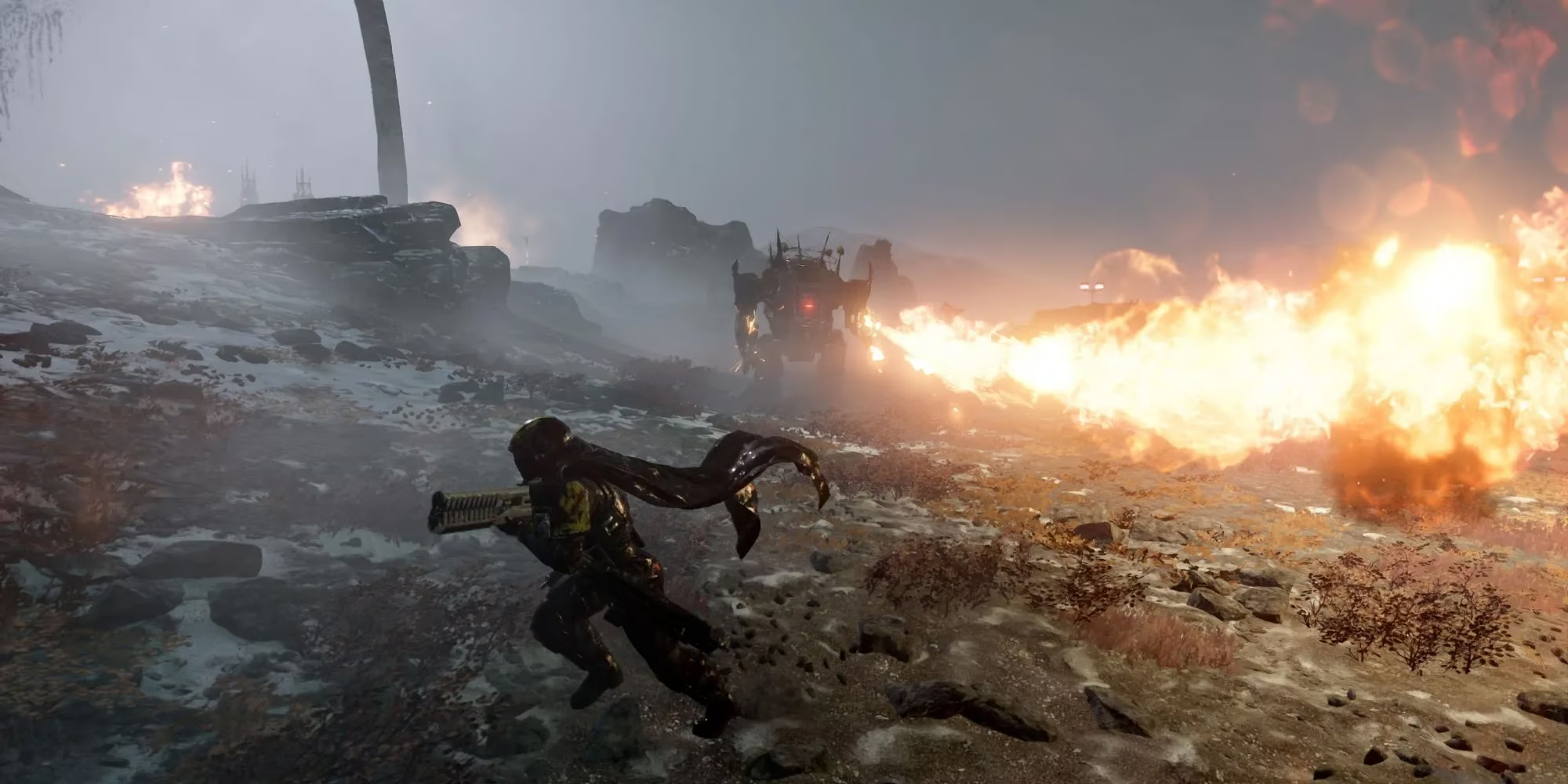
Contrast this with the philosophy openly espoused by Pocket Pair's CEO, which often seems less about creative passion and more about identifying profitable trends to replicate with minimal alteration. The "design by viral marketing" approach for Palworld's creatures feels transactional. It's a calculated move that paid off, but it leaves a distinct aftertaste of cynicism. This isn't to say fun wasn't delivered—the game's success proves it was—but the method matters in the court of public opinion. Gamers can smell a marketing gimmick a mile away, and Palworld's creature designs reeked of it.
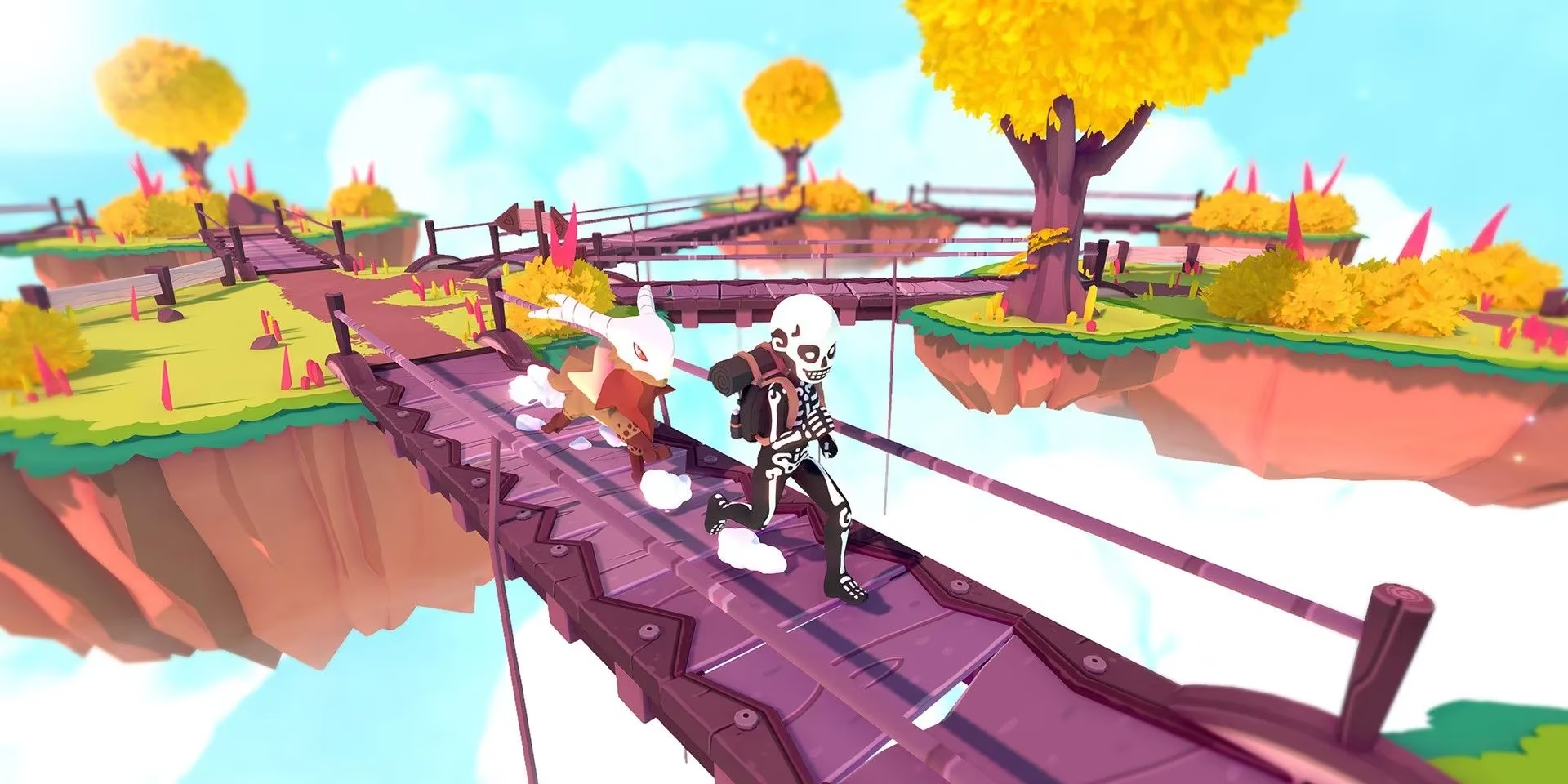
Furthermore, the Palworld defense brigade often overlooks a crucial distinction in game development: iteration versus imitation. Look no further than Temtem, the 2020 monster-taming MMO that was universally praised as a "Pokemon-like" without drowning in accusations of theft. Why? Because Temtem took the core genre formula and genuinely evolved it. It introduced always-online MMO elements, doubled down on strategic, stamina-based 2v2 battles, and crafted a unique, cohesive world with its own distinct visual identity. It stood on the shoulders of a giant to see further, not to steal its hat. Even the granddaddy Pokemon itself famously iterated on concepts from Dragon Quest V. Innovation within a genre is the lifeblood of gaming; slapping a new coat of paint on someone else's iconic creations is just… lazy.
So, where does this leave us? A quick summary for the busy gamer:
-
Helldivers 2: A love letter to a specific film's satire and tone, transformed into a unique co-op shooter experience. It's an homage.
-
Temtem: A deep, strategic take on the monster-taming genre that built upon its foundations with original ideas and designs. It's an elaboration.
-
Palworld: A survival/crafting game that uses blatantly derivative creature designs as its primary hook and marketing tool. It's a commercial amalgamation.
Each path has its merits and audience. The issue isn't that Palworld exists or that people enjoy it—the grind is real, and the base-building is addictive! The issue is the defensive hypocrisy of some fans who, perhaps subconsciously aware of the game's shaky creative foundations, feel the need to tear down other successes to validate their own enjoyment. 🎮➡️🤨
Complaining that Helldivers 2 didn't get the same plagiarism scrutiny is missing the forest for the trees. The criticism aimed at Palworld was never just about borrowing ideas—all games do that. It was about the brazen, artless method of its borrowing, specifically in its visual identity, which served as its main selling point. It's the difference between a chef creating a new dish inspired by Italian cuisine and someone opening a restaurant called "Mario's Pizza" that serves round bread with tomato sauce and cheese. One shows inspiration; the other shows a lack of imagination and a reliance on established brand recognition.
In the end, the lesson for 2026 is simple: just play what you enjoy. If you can look past Palworld's creatively bankrupt creature designs and have a blast building, catching, and surviving, more power to you! The game's success is a testament to the fun that can be found in its polished blend of mechanics. But for the love of Managed Democracy, don't turn around and try to police the reception of other games like Helldivers 2, which succeeded precisely because it executed its inspired vision with originality and clear affection. The gaming ecosystem has room for homages, elaborations, and even commercially savvy amalgamations. What it has less room for is fan-driven bitterness that mistakes legitimate critique for a personal vendetta. Now, if you'll excuse everyone, there are bugs to spread democracy to and Pals to put to work in ethically questionable mines. Carry on, soldiers… and trainers… or whatever you Palworld folks call yourselves. 😉