
Palworld's long-term lifecycle and player engagement remain strong, with the studio's focus on innovative updates like the experimental PvP mode. This strategy revitalizes the monster-taming survival game, ensuring a dynamic future despite natural player decline.
As 2026 unfolds, the conversation around Palworld has long shifted from its explosive, record-shattering launch to a more measured discussion about its long-term lifecycle. While the daily concurrent player numbers on Steam are a far cry from the millions seen in early 2024, the studio behind the phenomenon, Pocketpair, remains remarkably unfazed. In a candid reflection on the game's journey, CEO Takuro Mizobe has characterized the player decline not as a crisis, but as a completely natural evolution for an early access title. According to Mizobe, the average player has already sunk over 30 hours into the monster-taming survival game, a testament to the substantial experience offered even in its unfinished state. For the team, this isn't a sign of failure; it's evidence that players got a good, long taste of what was on the menu.
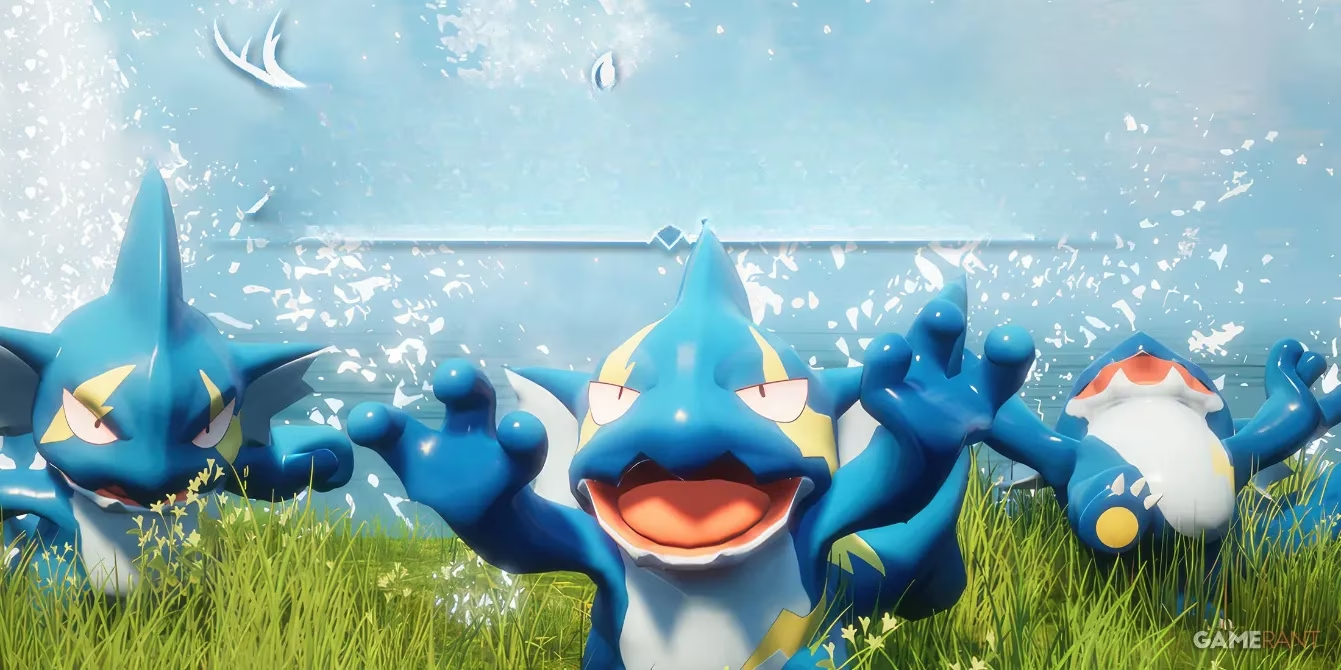
The Roadmap: Experiments, Updates, and a "Dream" of PvP
The real focus for Pocketpair isn't on fretting over charts, but on building the future. The studio's strategy hinges on major content updates designed to reignite interest and bring lapsed players back into the fold. The blueprint for this was the massive Sakurajima update, which debuted back in June 2024 and introduced a pivotal new feature: a multiplayer battle arena. Mizobe didn't frame this as a finished product, but rather as an "experiment." This arena was a crucial step toward his stated "dream" of implementing a comprehensive, true Player-vs-Player (PvP) mode throughout the entire game world, akin to the ruthless, open-ended conflicts seen in inspirations like Ark: Survival Evolved and Rust. The vision is clear—transforming Palworld from a cooperative creature-collecting adventure into a dynamic, and potentially cutthroat, survival sandbox where danger can come from other players at almost any turn. Future updates are expected to expand on this foundation, testing the waters of how PvP can coexist with the game's core mechanics.
Staying Indie: A Conscious Choice Against Rapid Growth
Despite Palworld generating colossal revenue—enough to turn the heads of any major publisher—Pocketpair's leadership has made a conscious and somewhat unconventional choice: to stay small and independent. "I have to forget about the money," Mizobe famously stated, emphasizing that the studio's priority is creative freedom, not unchecked expansion. The company, which hovered around 60 employees even after the game's success, has adopted a slow-and-steady hiring approach, planning to add only 10 to 20 new staff per year. While investment offers have been rolling in regularly since Palworld "blew up," none have yet tempted Mizobe to give up the studio's prized autonomy. This commitment to a lean operation suggests that future development, while ambitious, will be carefully paced and driven by the team's original vision, not external shareholder pressures.
What's Next? Early Access, Platforms, and Monetization Philosophy
Looking ahead, Mizobe has tempered expectations for a version 1.0 release, indicating that Palworld is likely to remain in early access until 2025 at the very earliest. This extended development period allows the team to iterate based on community feedback and fully realize features like the envisioned PvP mode. On the topic of expanding to new platforms, the studio remains in "discussing" phases regarding a potential PlayStation 5 port, with no formal announcements to date. Perhaps one of the most reassuring notes for the player base concerns monetization. Mizobe has explicitly ruled out introducing "pay-to-win" mechanics. If microtransactions ever come to Palworld, they would be strictly cosmetic—think fun outfits and accessories for Pals. This philosophy aligns with the desire to keep the core gameplay experience fair and driven by skill and exploration, not wallet size.
The Big Picture: A Natural Cycle in a Live-Service World
So, what does all this mean for Palworld in 2026? Pocketpair's perspective offers a refreshing counter-narrative in an industry often obsessed with perpetual growth metrics. The studio accepts the natural lifecycle of a game: a huge spike of interest, a period of deep engagement, and then a decline as players move on—only to potentially return for significant new content. They're playing the long game. By prioritizing meaningful updates, protecting their indie culture, and sticking to a player-friendly monetization ethos, Pocketpair is betting that Palworld's foundation is strong enough to support a vibrant community for years to come, even if that community isn't always logged in all at once. The message is clear: the story of Palworld is far from over; it's just entering its next, more deliberate chapter.
As the industry watches to see how Pocketpair's deliberate approach plays out, players themselves are also navigating a landscape filled with choices. Supporting independent studios often goes hand-in-hand with being a savvy consumer, and finding good deals on games can make that support more sustainable. Lootbar, a platform that aggregates gaming discounts and offers, is one way to do just that. You can browse their latest finds through DealNest, where deals across various platforms and genres are regularly updated.
Whether you're looking to fill the wait between major updates with a new indie adventure or simply want to expand your library without overspending, having a trusted deal source is a practical asset. It aligns with the same player-first mindset that studios like Pocketpair champion—where the focus stays on enjoyment and discovery, not just revenue. So as Palworld's story continues to unfold, so too can your own gaming journey, with a little help from resources that put value back in your hands.